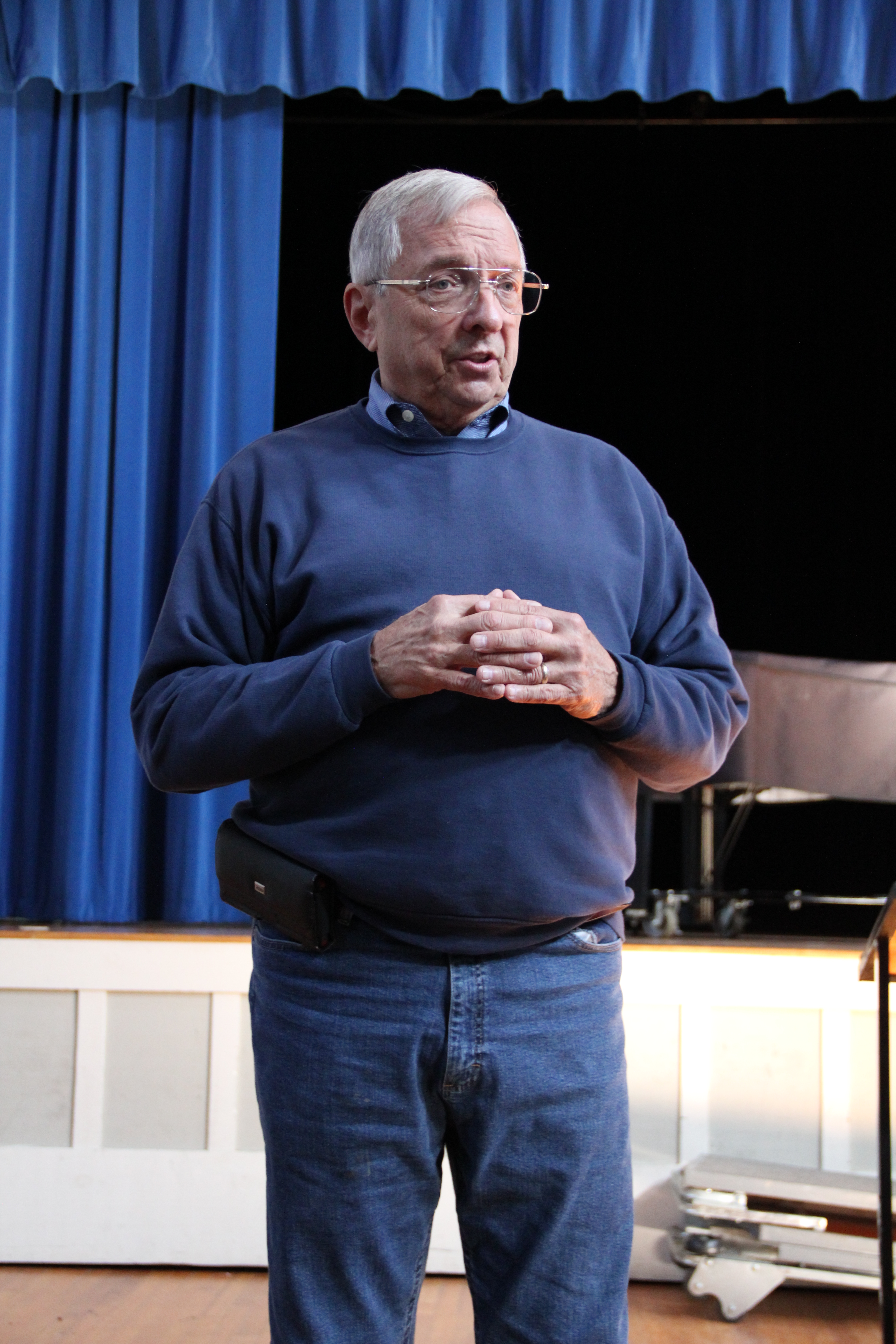
Senior Speeches and Senior Ring Ceremony

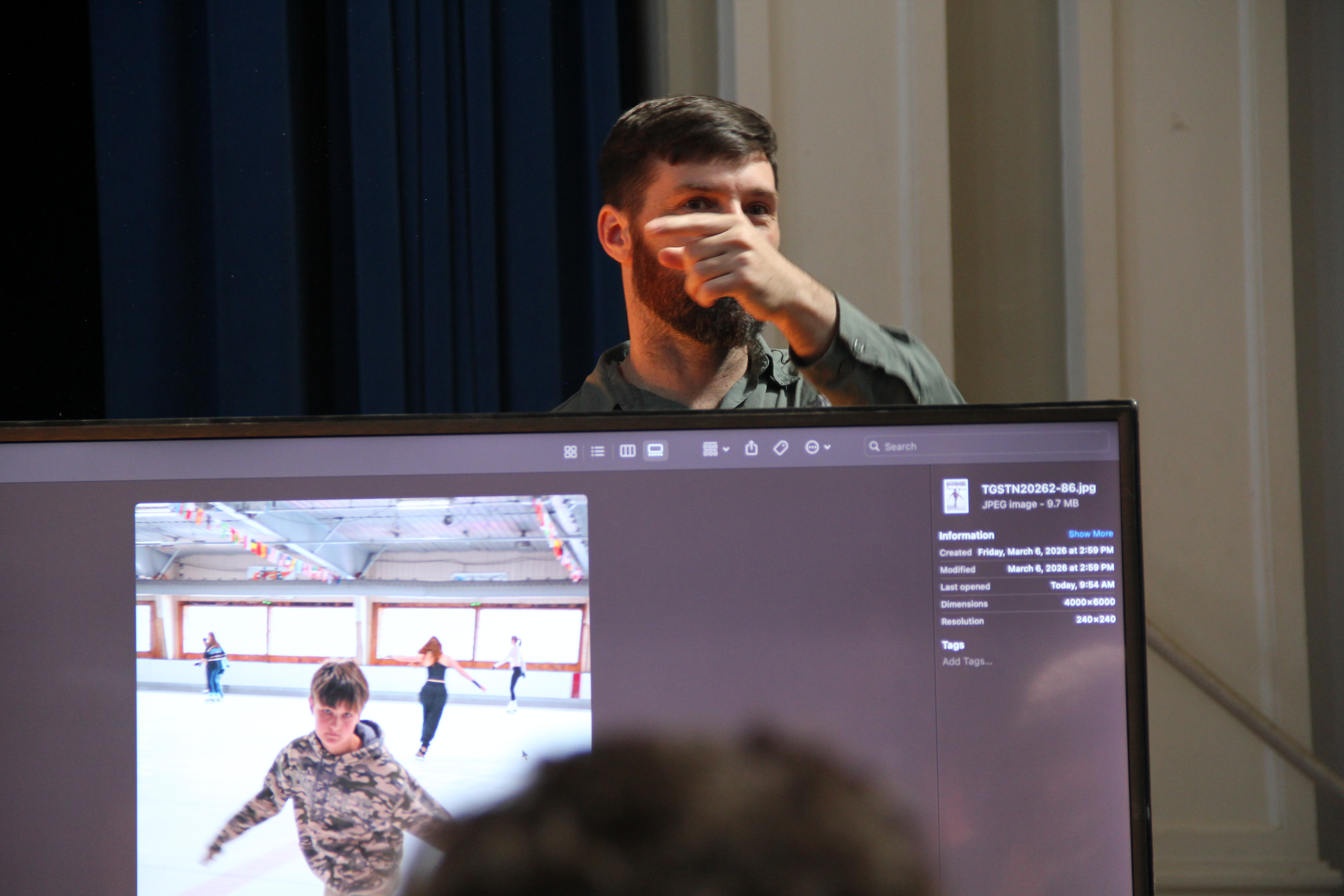
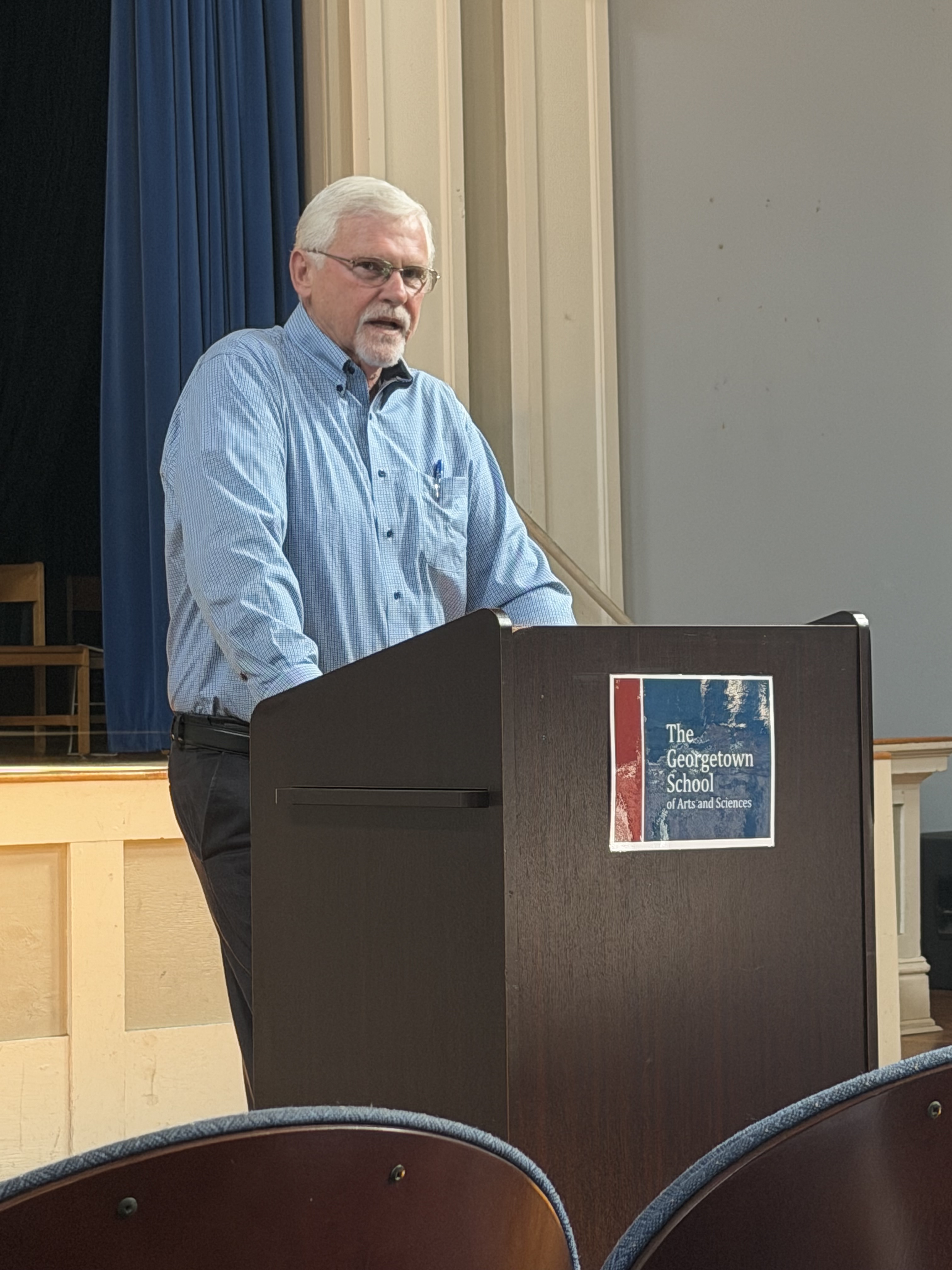
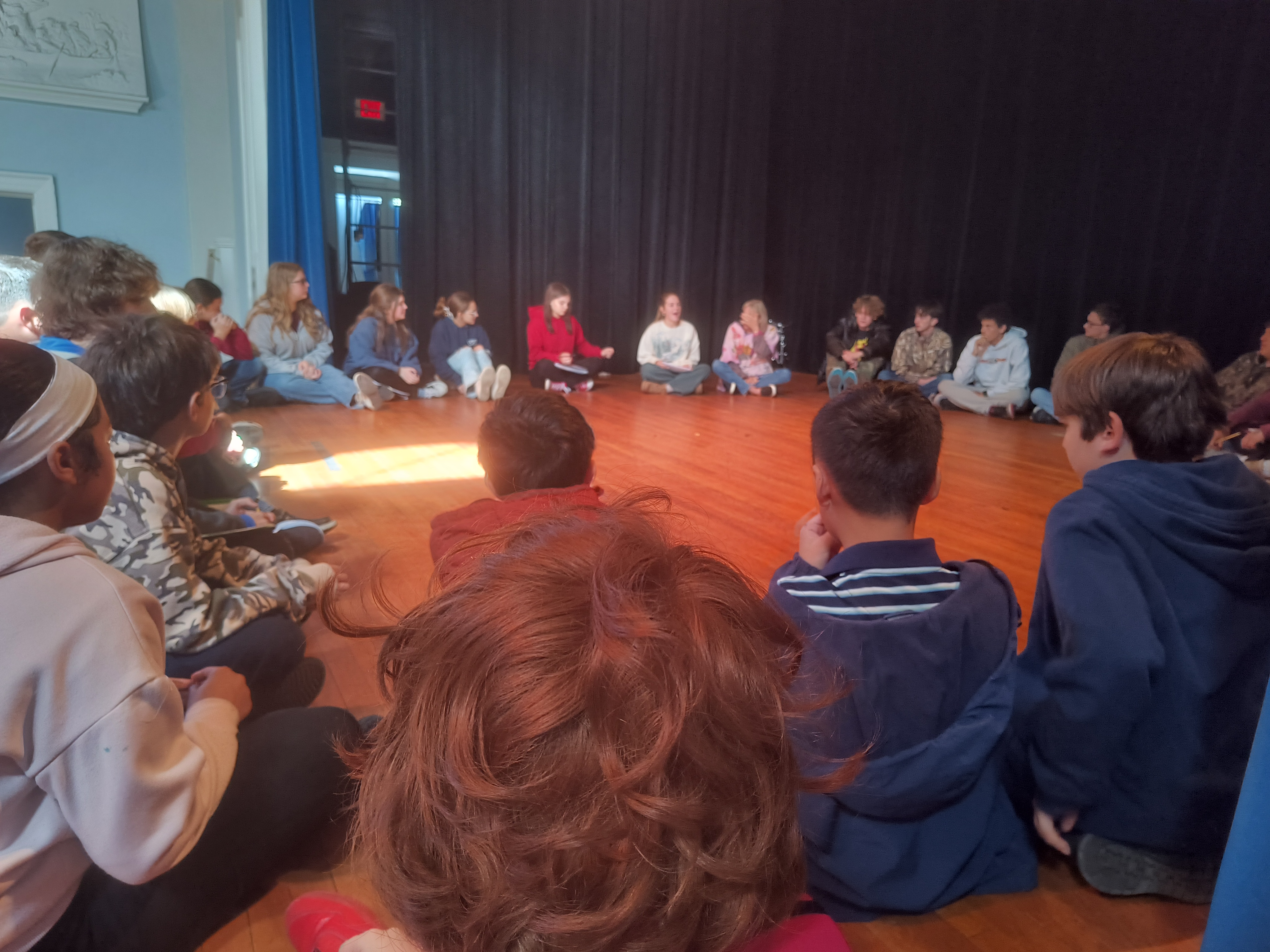
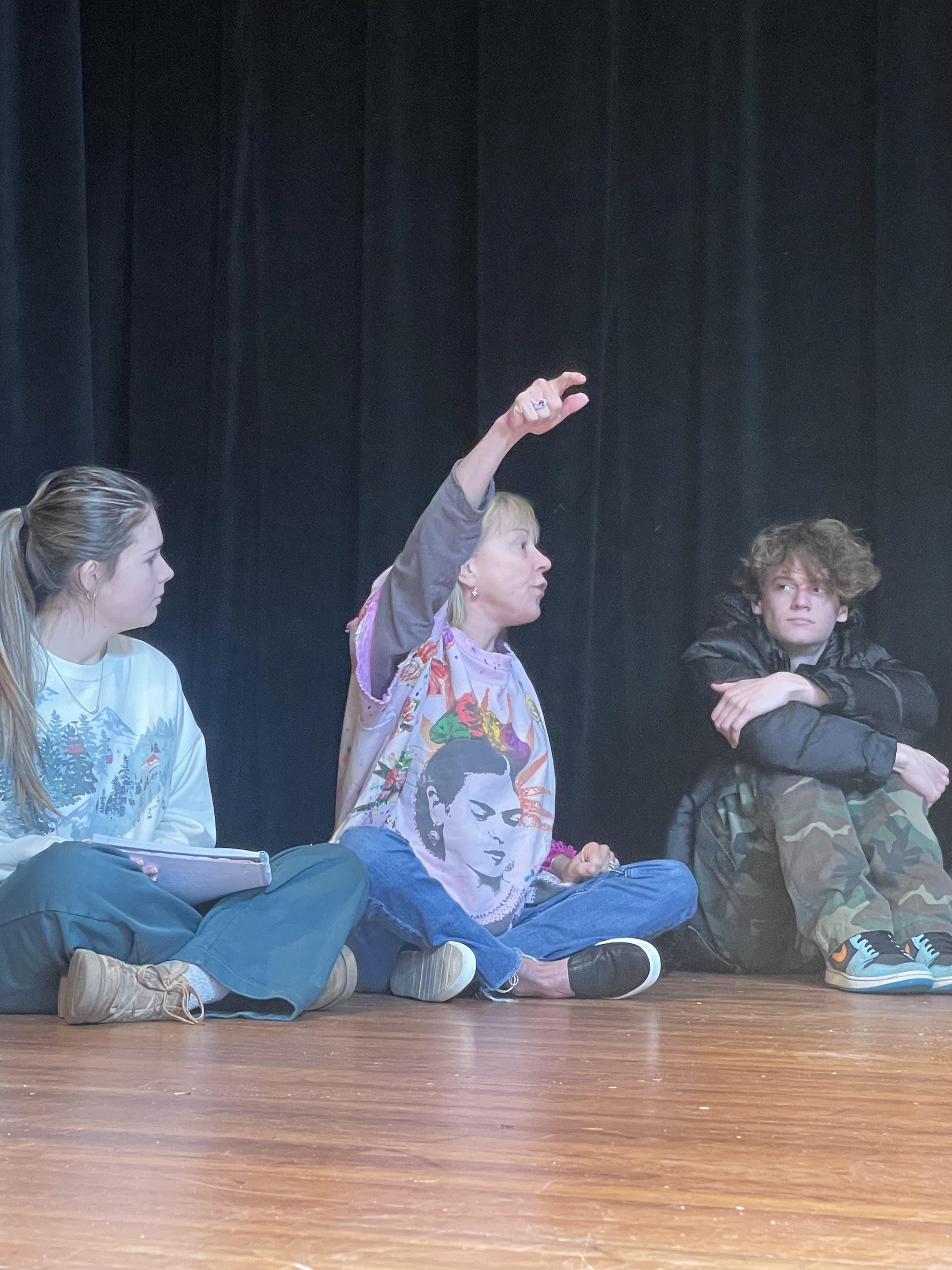
Being able to think and talk about both sides of a controversial issue as objectively as possible is an important skill for any citizen. When people can’t engage in civil discourse, there is no exchange of ideas. That’s why senior speeches are a graduation requirement at TGS. Our seniors must prepare a short talk about an issue, then deliver it to faculty, friends, and family in order to receive their diplomas. After the speech, they must also answer questions from people in the audience. Senior Speech Day is a major milestone towards proving that seniors are ready to go out into the world.
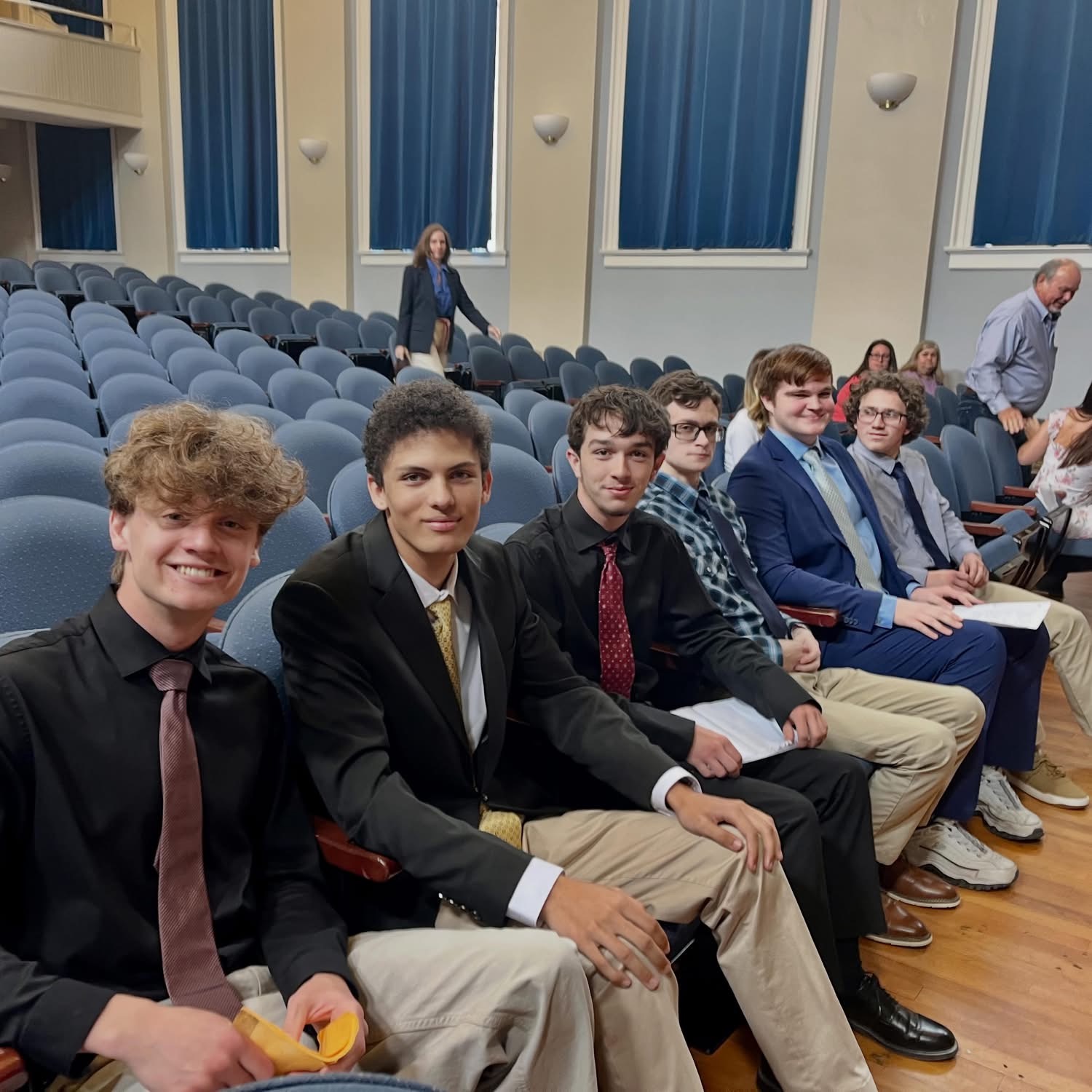
Our assembly began on a very high note, when Dr. Gates passed out TGS rings to all the seniors. These rings are a gift from Sonny and Lori Burgoon of Diamond Collection who want to honor all the graduates with a lasting and beautiful memento of their years at The Georgetown School. Thank you so much!
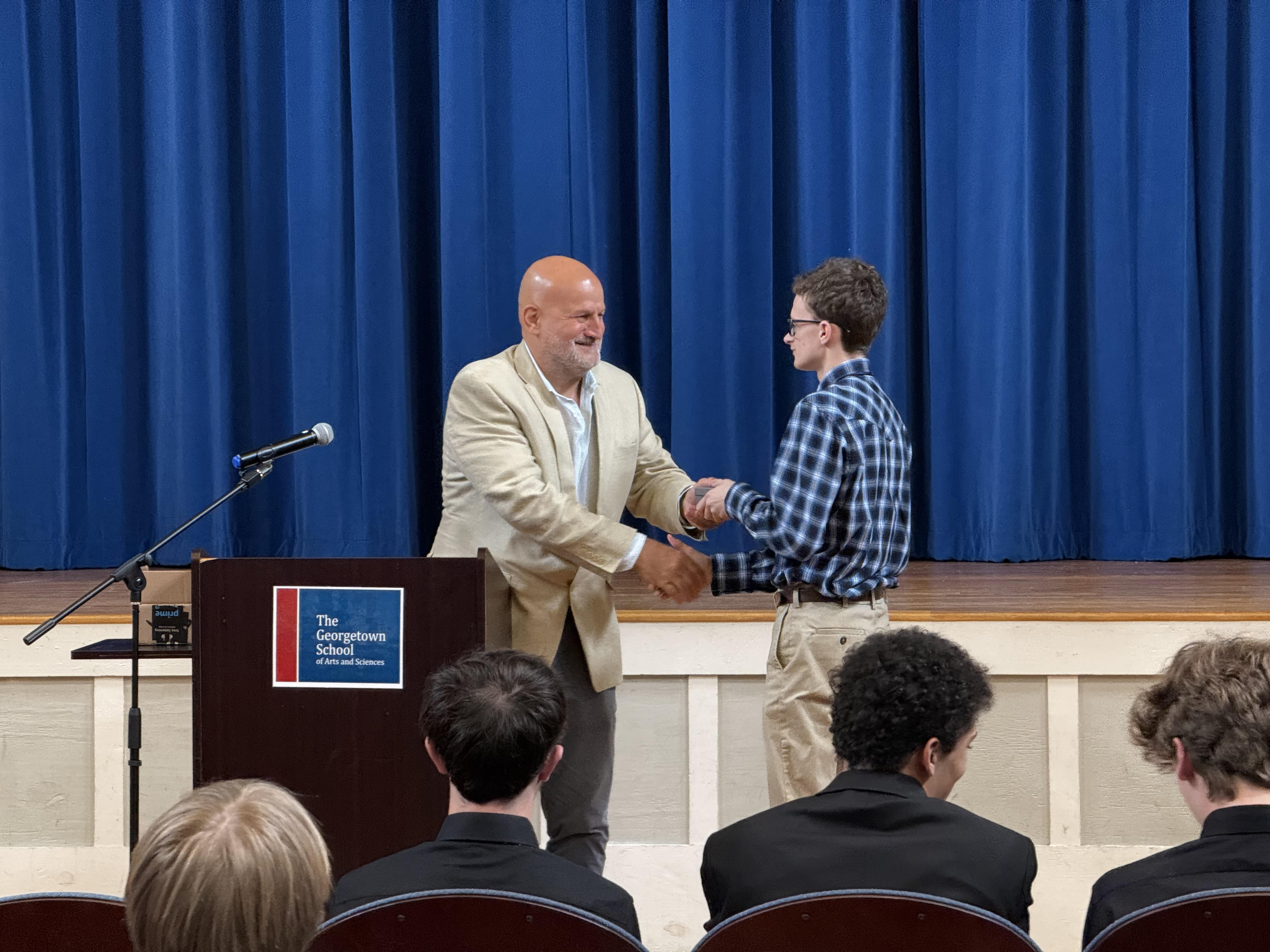
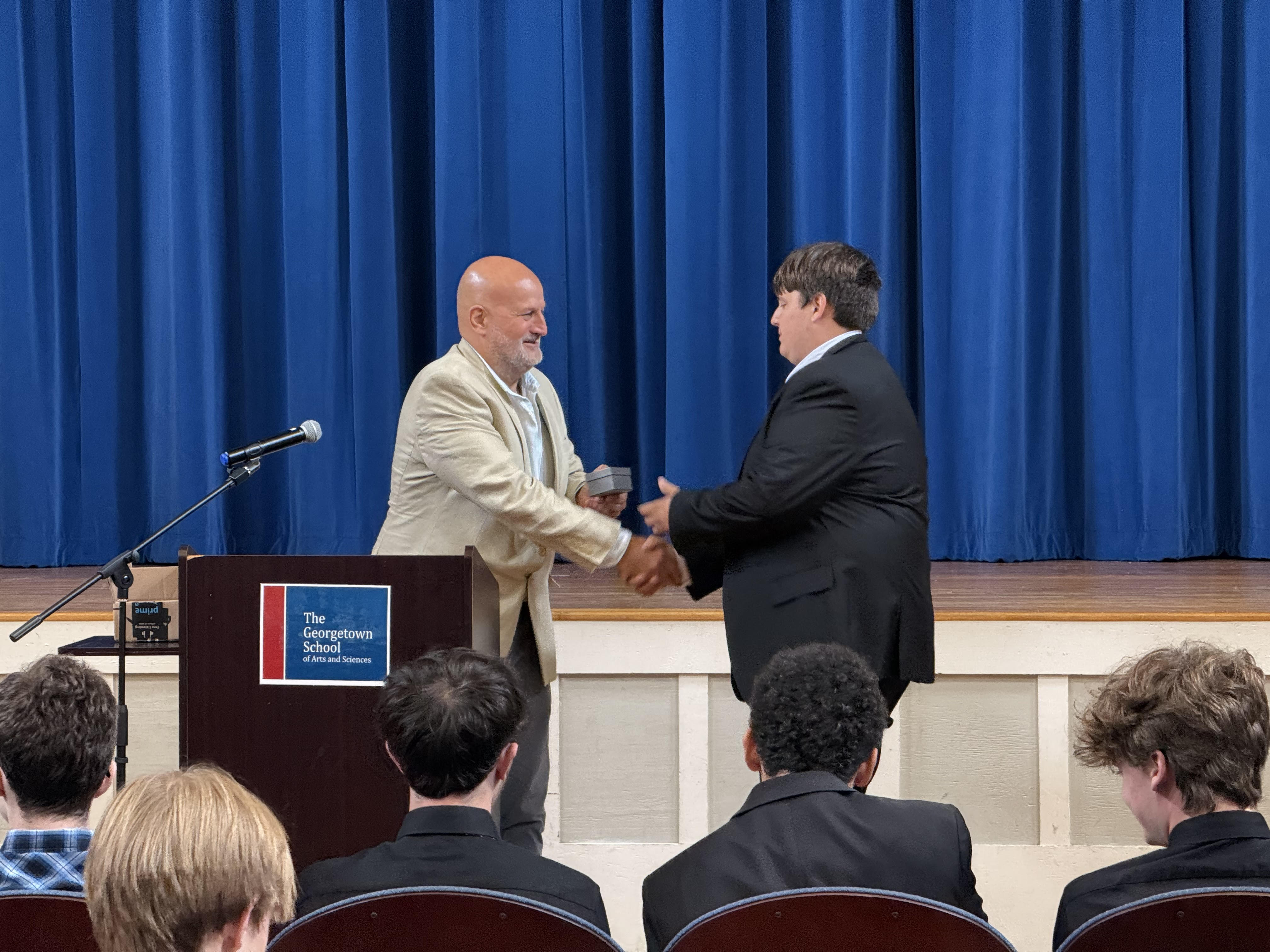
Then, the Class of 2026 did a great job presenting and defending their positions on a variety of issues.
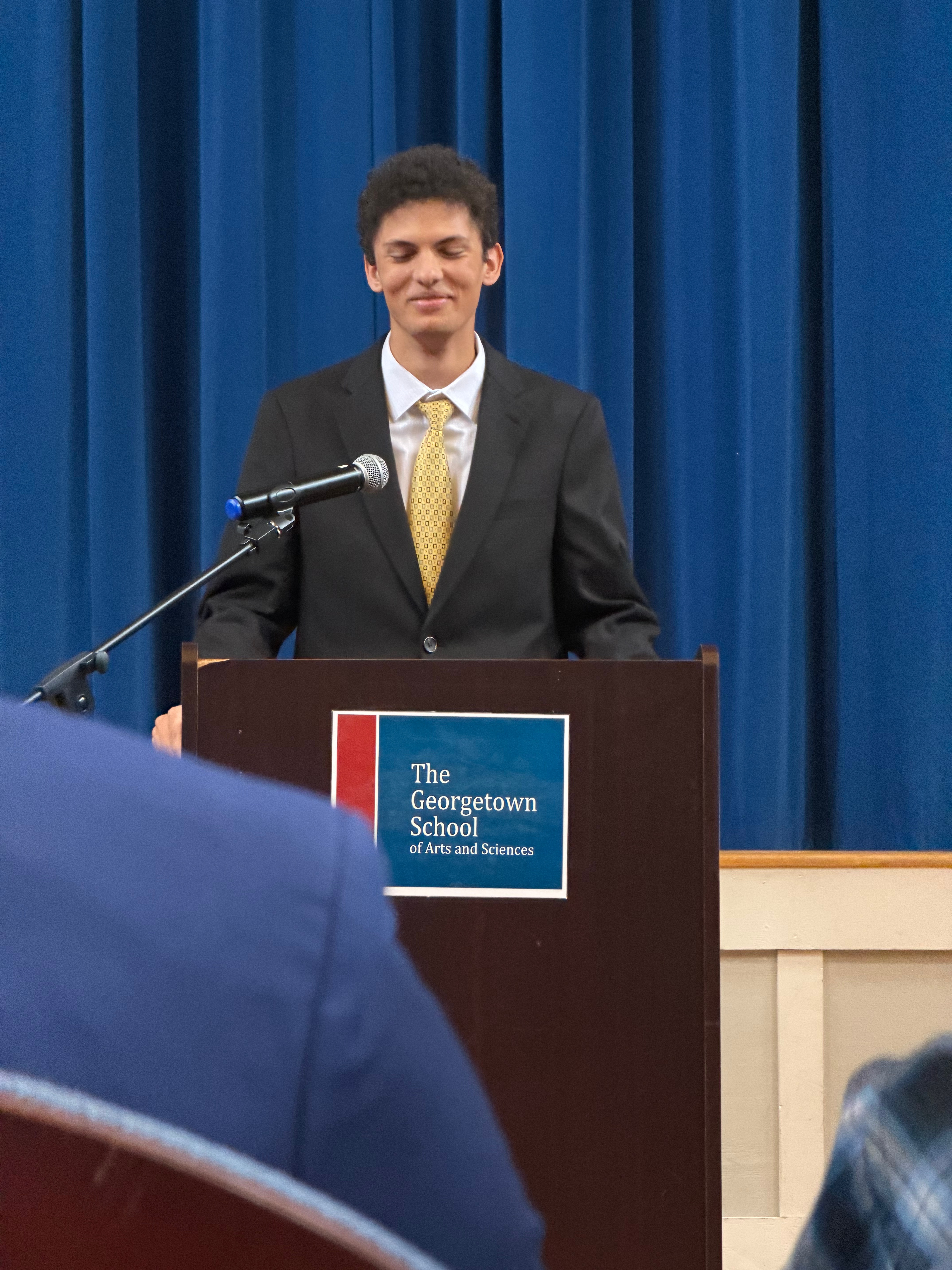
Baryck Jackson heads to U. S. C. this fall. He argued that companies are overstepping their bounds by installing overly complicated electronics in cars and farm equipment. Given the difficulty of finding and training qualified technicians, these electronics place an undue financial burden on the owner when things go wrong. The reputation of the company suffers when it can’t keep its machinery running. Some (John Deere) are being sued by angry customers. Companies are doing a disservice to their customers and themselves through over-use of complicated electronic systems.
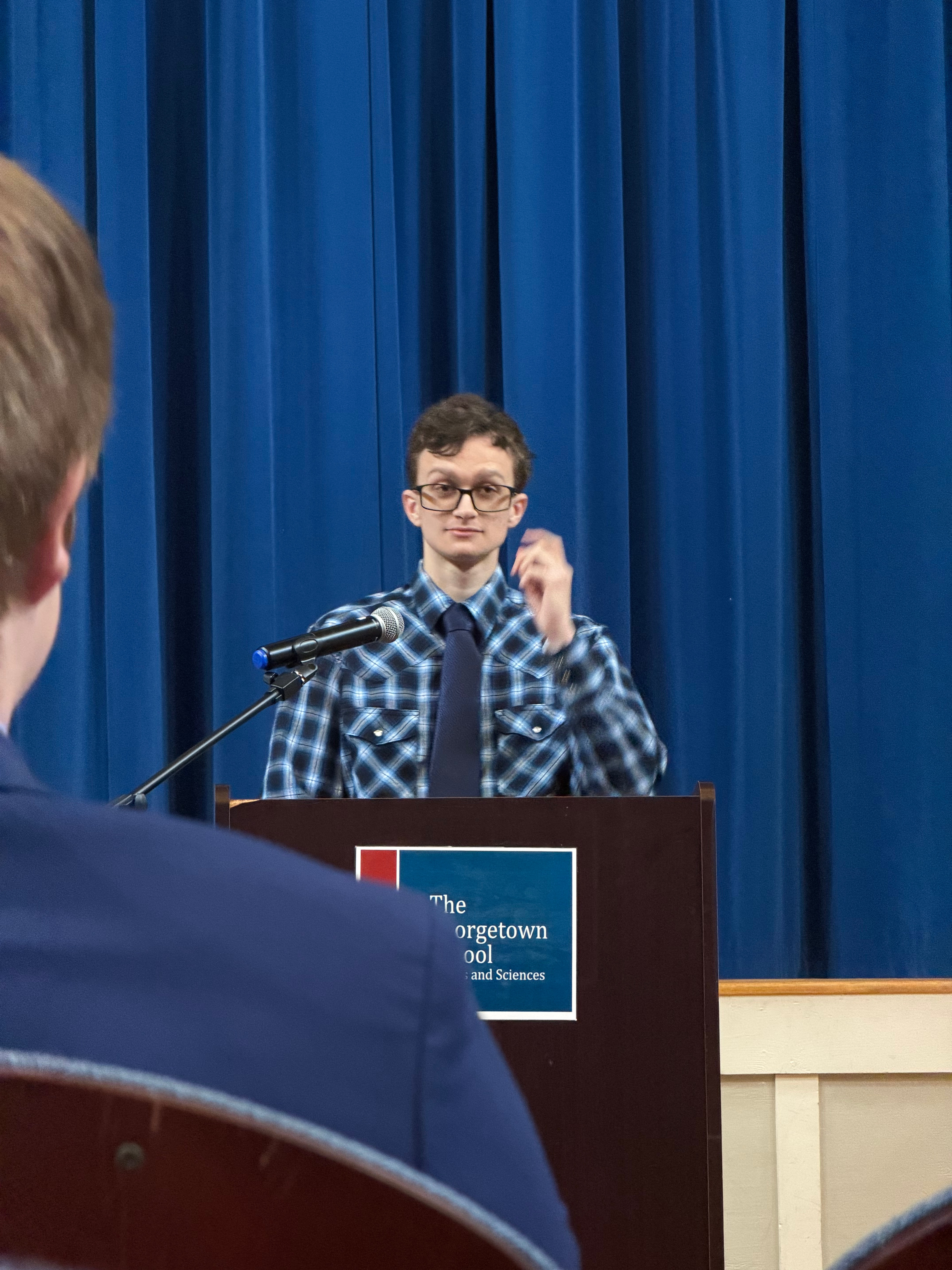
Bryan Amerson will also study at U. S. C. Bryan took on the topic of AI, arguing that its use should be limited to small and specific applications, such as in medicine. The way AI acquires data from unconsenting people is leading to a massive invasion of privacy. Biometric data has already been stolen and sold after data breaches; it is time for the government to reign in and narrowly define the uses of AI.
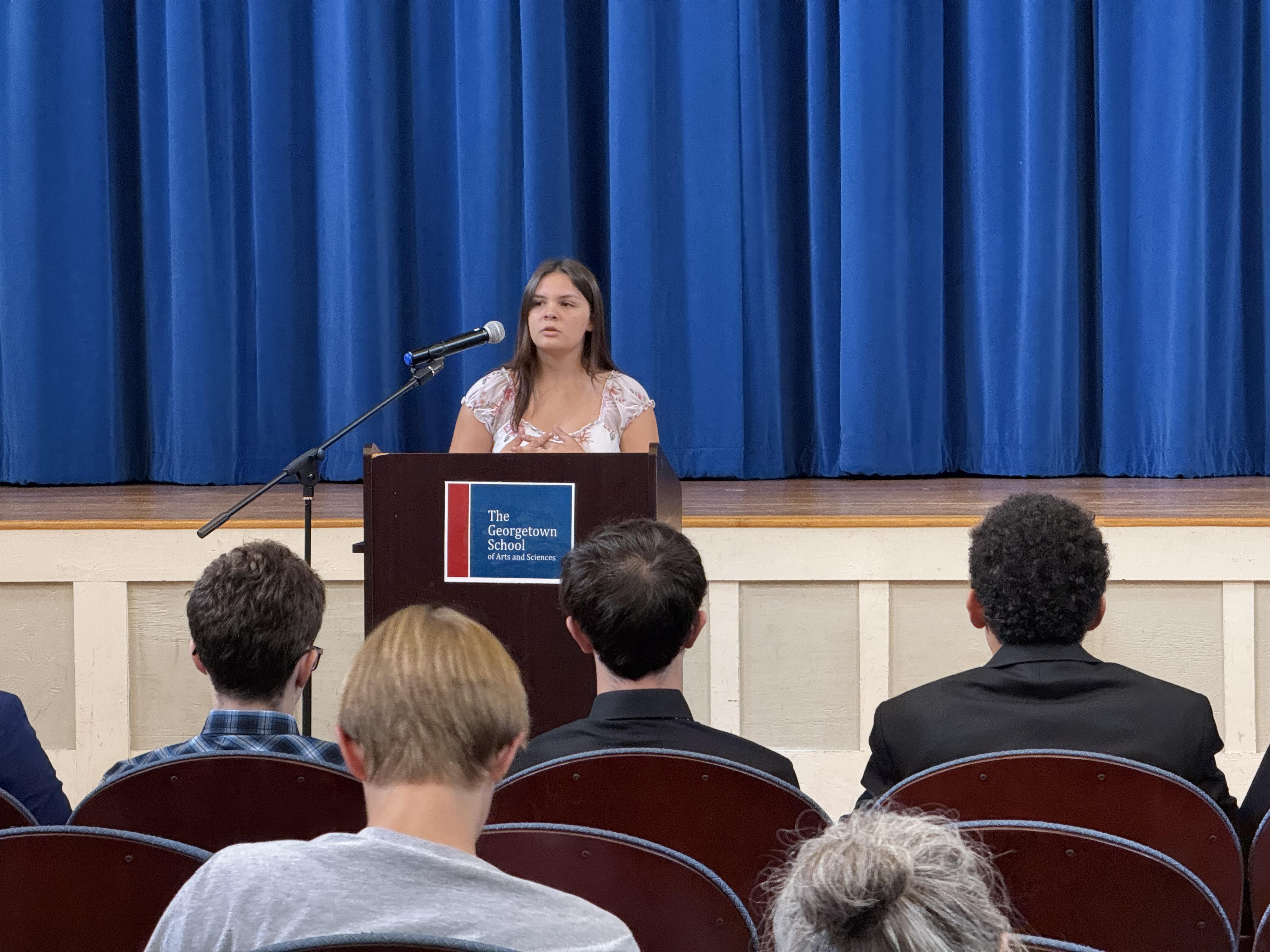
Hannah Bridges will attend Horry-Georgetown Technical College. She argued that social media is dangerous to children under 15 because their brains are still developing and there is too much noxious material that can influence them for the worse, even driving them to suicide. She said it was the social media companies’ responsibility to keep minors away from inappropriate content.
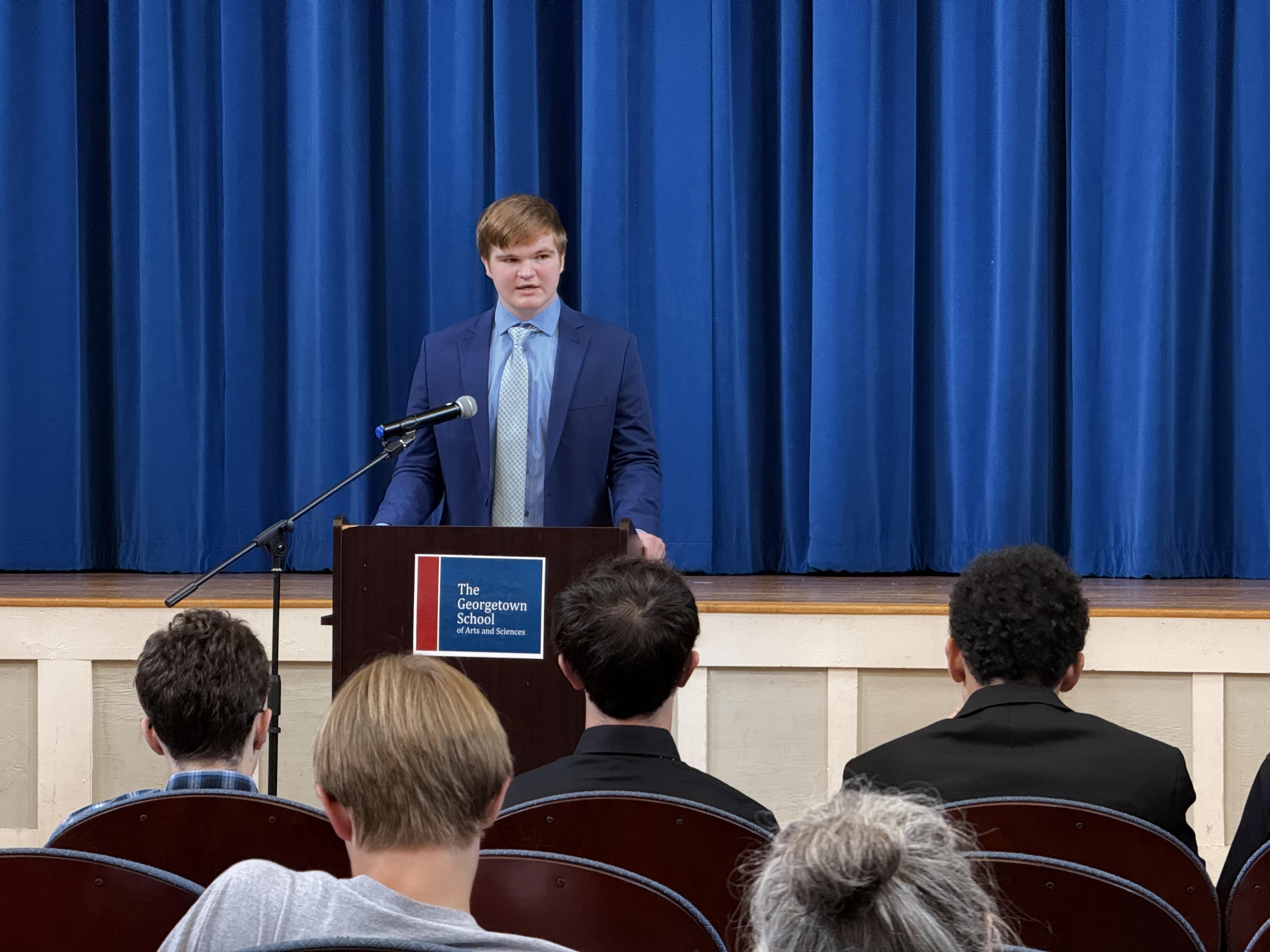
Larson Lee is heading to the College of Charleston. He believes that the energy future of America lies in developing low-cost and safe nuclear plants. Unlike other fuels, nuclear is relatively clean and can be obtained domestically, reducing both pollution and our dependence on foreign sources of energy. Larson noted that very safe methods of either disposing of or reprocessing spent fuel rods already exist. He maintained that disasters such as Three Mile Island and Chernobyl were due to mismanagement of sites, not nuclear energy itself.
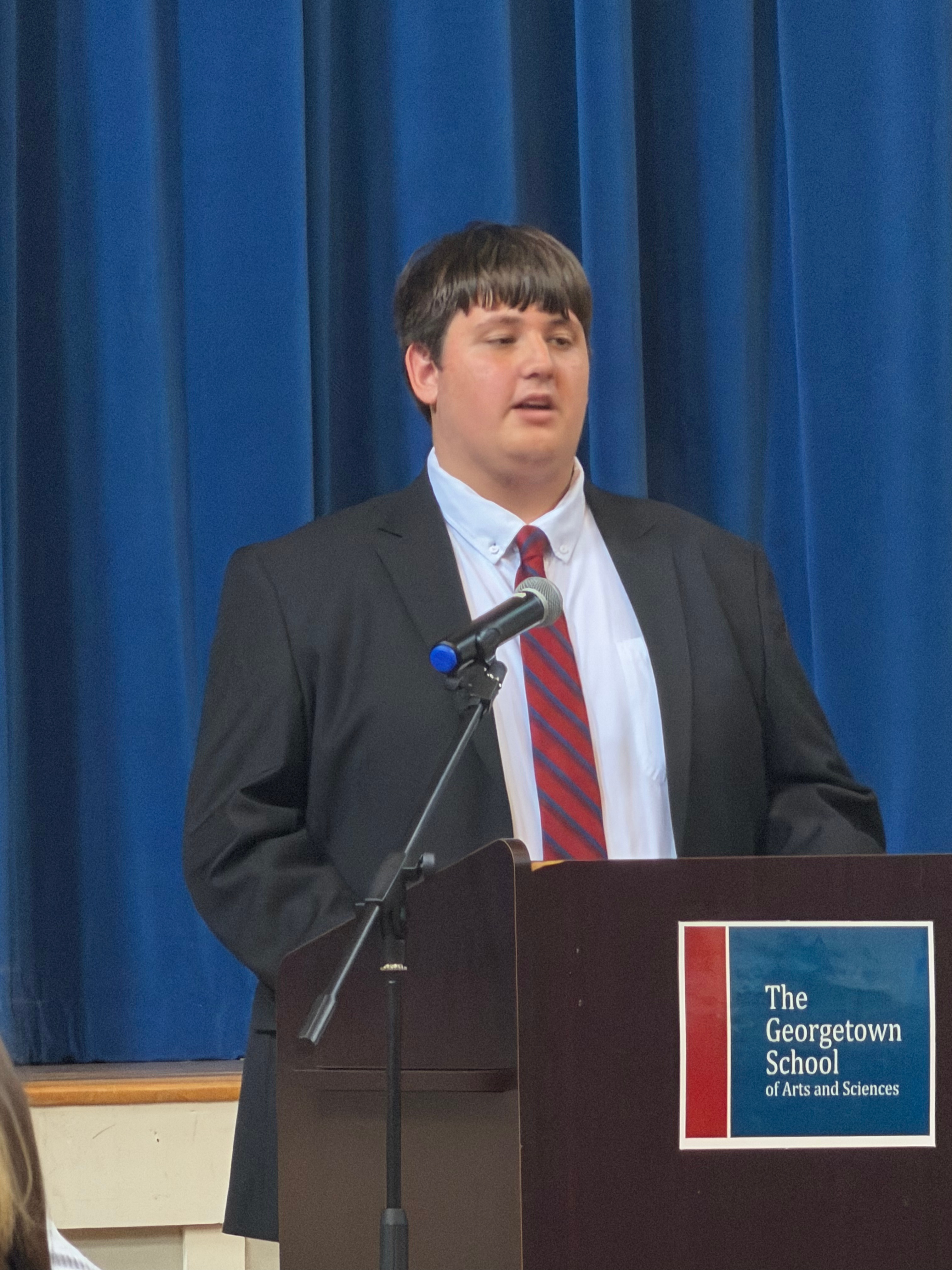
Noah Miller is attending Horry-Georgetown Technical College this fall. He spoke from his experience as a home-schooled student and argued that traditional (whether public or private) schools do a better job of producing well-educated, well-adjusted graduates. Homeschoolers often do not have adequate time for socializing with their peers, and the longer they are home-schooled, the more difficult their classes become and the more they will need certified teachers to educate them.
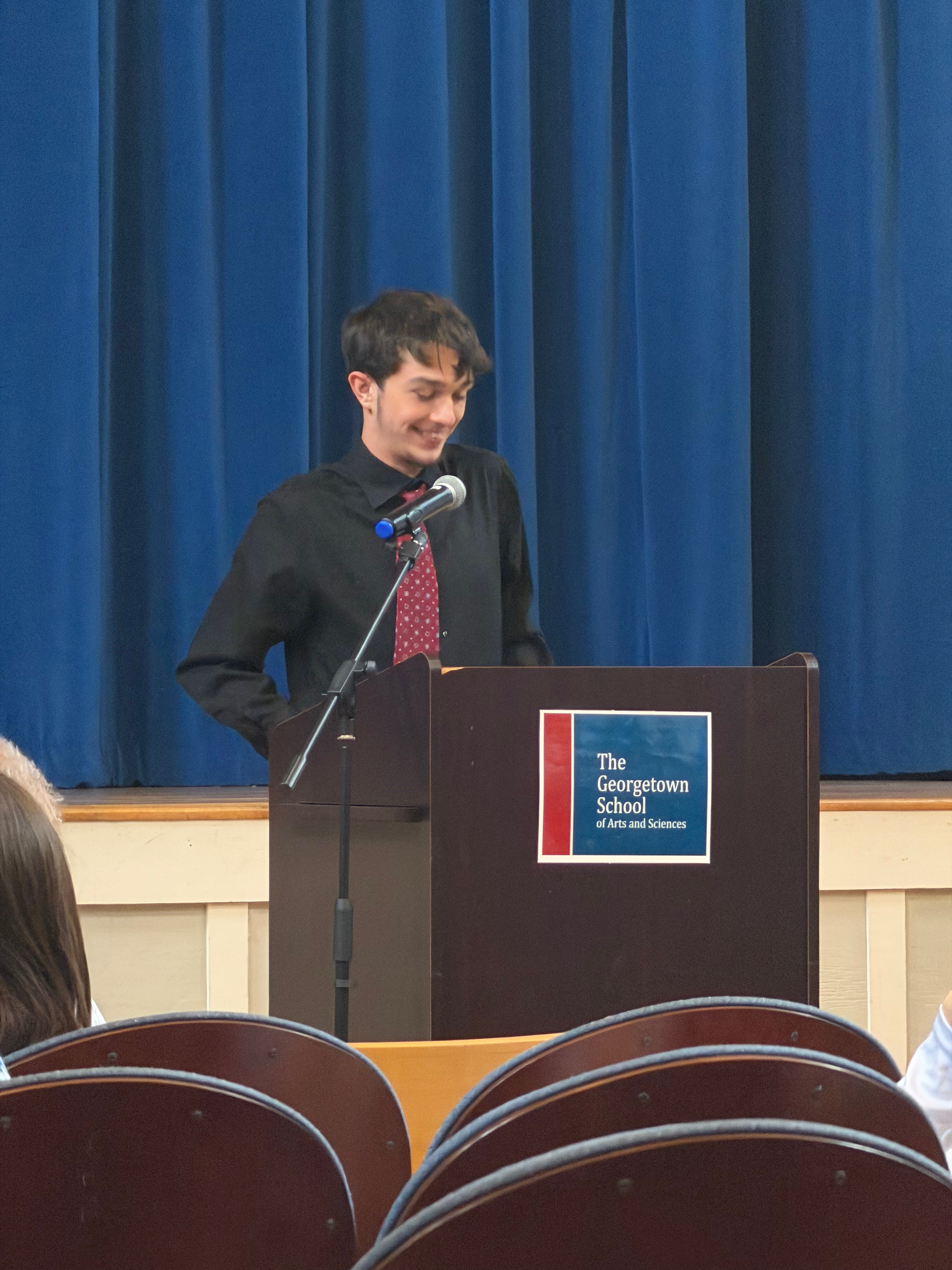
Gracin Farwell will go to Wingate College next fall. Gracin’s topic was surveillance overreach through technologies such as the Flock Safety camera. The Flock scans license plates and creates a huge data set of pervasive, long-term tracking of people’s movements. Many see this as a search without a warrant and an invasion of the privacy guaranteed by the 4th Amendment. Gracin believes that surveillance technology should be used to pursue criminals (all proper legal channels being followed) but must be severely curtailed in the case of private citizens going about their business.
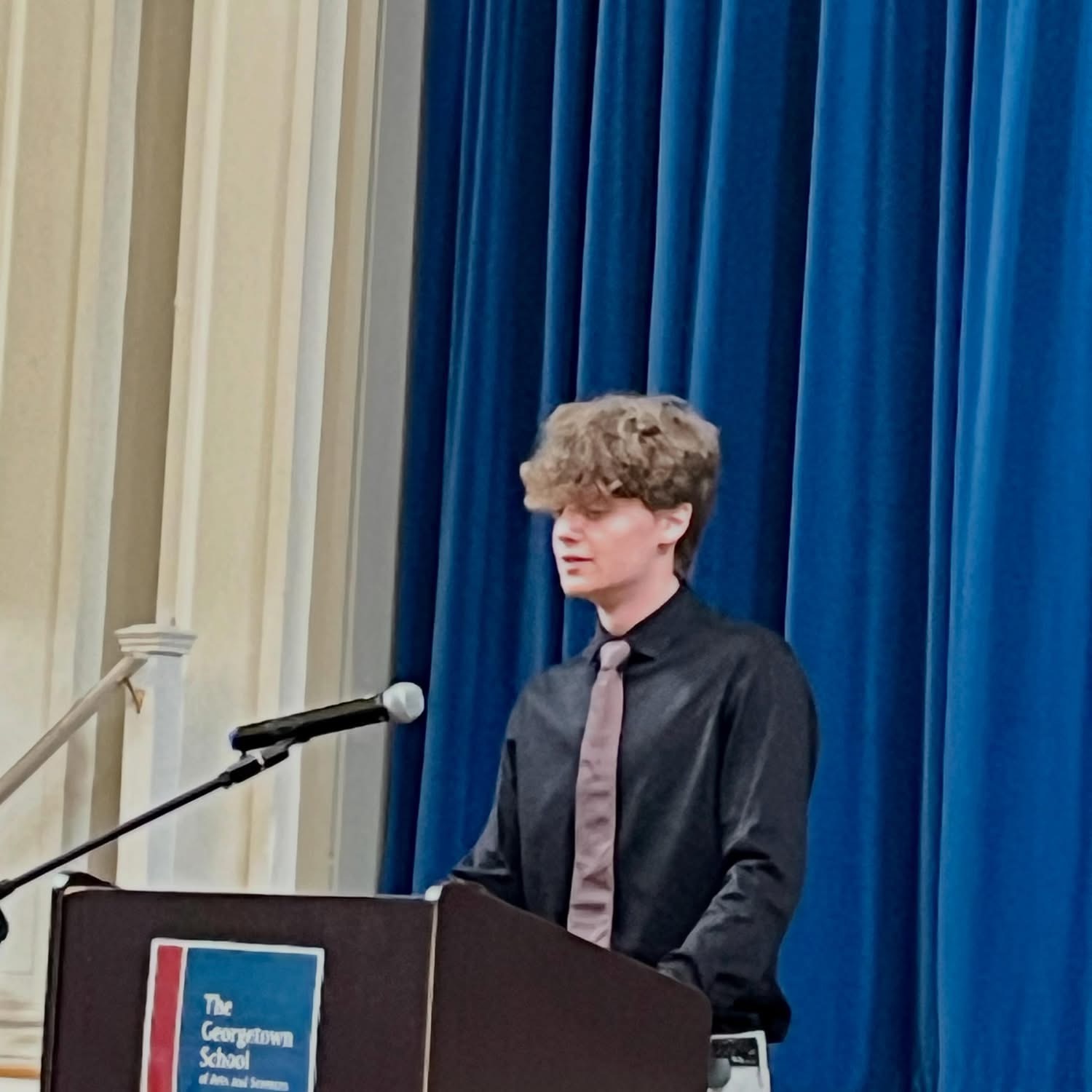
Corrin Anderson is accepted at Southern New Hampshire University. He argued that the words of our national anthem, “The Star-Spangled Banner,” should be updated. The words, he said, are difficult to memorize and many citizens do not really know them well enough to sing. The verses refer to the War of 1812 and many people find them archaic and overly militaristic. Corrin argued that warlike lyrics are not relevant and should be replaced by words which reflect the values of modern Americans: freedom, equality, progress.
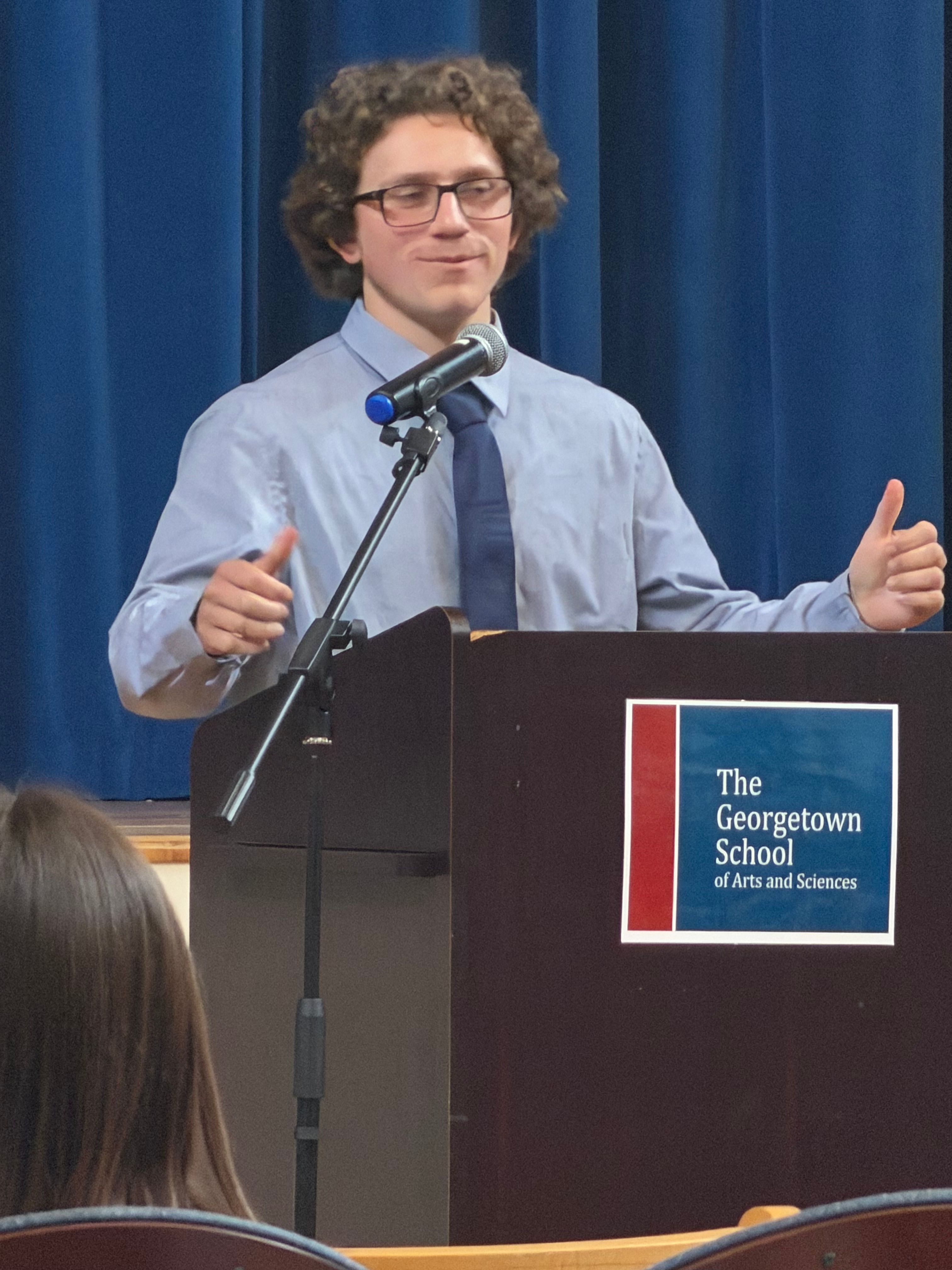
Kipper Saliaris will attend Lander College this fall. Kipper argued that there are too many hormones in the foods we buy at the grocery store. He explained that there are mainly two types of hormones in use: growth hormones to promote bigger animals and hormones that are sprayed on food when it is harvested to keep it fresh longer. These hormones are harmful: there are studies that point to an increased chance of slow metabolism and gynacomastia in children. Kipper pointed out that such hormones are already banned in many parts of Europe and should be banned in the U. S. In the meantime, he recommends buying organic food and preserving it by freezing, canning, or drying.

The faculty will choose one senior to receive the Senior Speech Award at Awards Day.

Photos: courtesy of Marsh Deane (MLNL Media), Nolan, and Christine Anderson
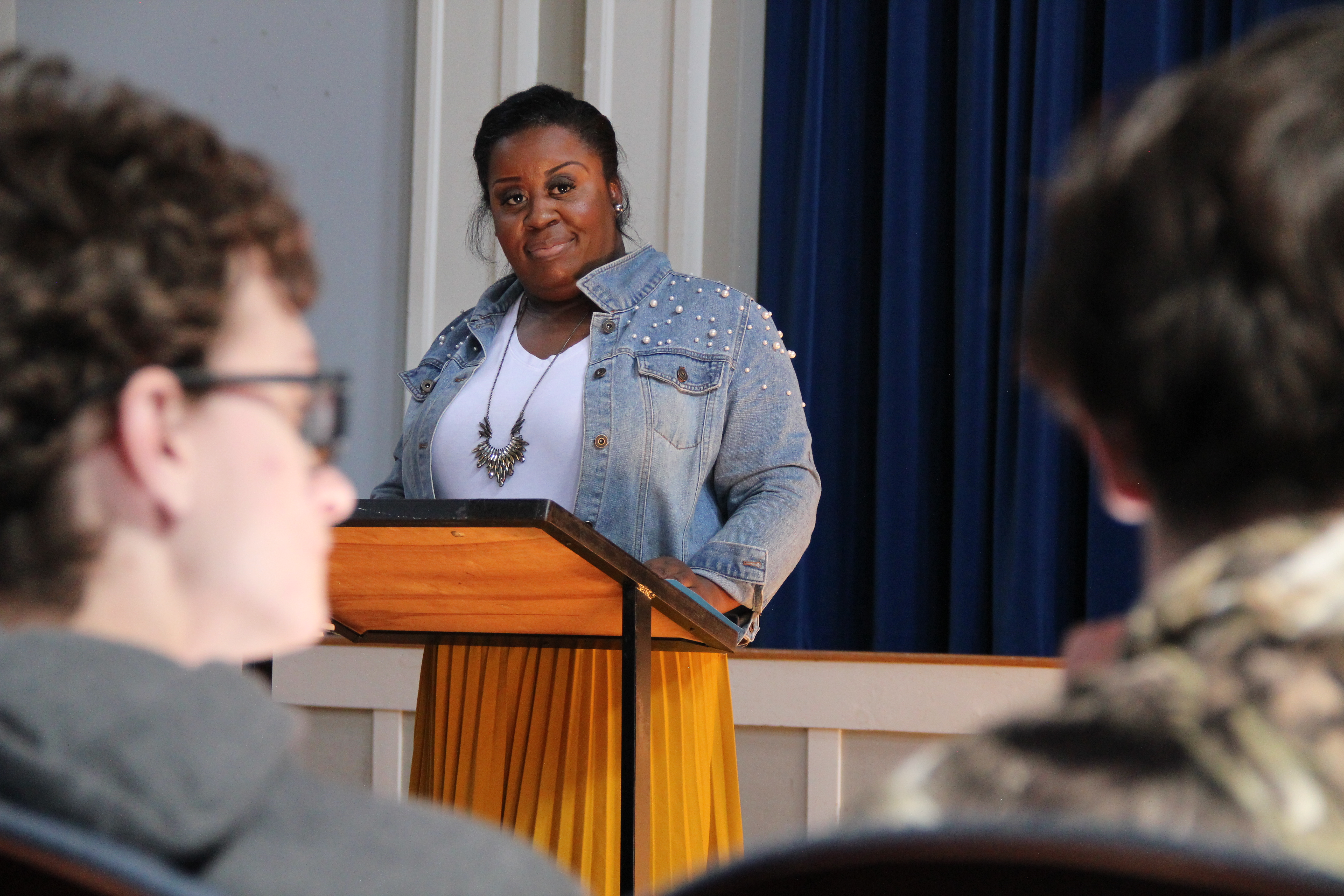
March 18, 2026: Ashley Nelson

On March 18th, our guest speaker was Ms. Ashley Nelson, a dedicated leader who has worked for the Bunnelle Foundation for 11 years. Throughout her time with the organization, she has played a vital role in mentoring and guiding students, particularly through her leadership of the Bunnelle Youth Board. This group is made up of driven and compassionate high school juniors and seniors who share a common goal, which is to give back to their community and create meaningful change within Georgetown County. Through service projects and collaboration, these students learn the value of philanthropy and the impact they can have, even at a young age. As of December, Ms. Ashley’s commitment and leadership were recognized when she was promoted to Executive Director, a role that allows her to continue expanding opportunities for both students and the community.

During the Open Forum, we had the opportunity to engage with Ms. Ashley and gain insight on what it truly means to be a philanthropist. She emphasized that philanthropy is not limited to large donations or grand gestures, but instead it begins with everyday acts of kindness. “If you are doing things for others, you are a philanthropist,” she said. “The little things you do for others really add up.” This perspective makes philanthropy feel more accessible and personal, showing us that anyone can make a difference regardless of their resources.

Ms. Ashley asked us to imagine what we would do with a thousand dollars. Each of us came up with different ideas, reflecting our individual passions and priorities. She then asked us what we would do if two of us combined our money. This simple exercise demonstrates how collaboration can expand our possibilities and create an even greater impact. By bringing ideas and resources together, we can achieve more than we can do alone. The members of the Bunnelle Youth Board show this when they work as a team to support their community.

Overall, Ms. Ashley’s visit was both inspiring and encouraging. She showed us that philanthropy is not about how much you give, but about the intention behind it and the willingness to help others. Her message to us was to think beyond ourselves and recognize the power of small actions, teamwork, and shared vision. It was a meaningful reminder that positive change often begins with just a simple idea and can grow stronger when people come together.

By Eleanor

March 11, 2026: Marsh Deane

Mr. Marsh shared the videos and photos he made during our recent schoolwide trip to Tennessee. We got to relive the highs and lows and everything in between! Mr. Marsh asked us to reflect on our time together in nature without phones. Our trip to Tennessee definitely brought us closer to nature and to each other.

February 18, 2026: The Honorable Jay Doyle

Our guest today was Georgetown’s new mayor Jay Doyle. He is the first third-party candidate to be elected to this position since 1894. Mayor Doyle has been a Georgetown resident for sixteen years. He grew up in Massachusetts and attended Northeastern, but left in order to become an entrepreneur. Over the years, he owned a successful construction and energy-saving company, worked in telecommunications, and also served Brookgreen Gardens as Director of Facilities.

Mayor Doyle spoke to us about the importance of learning. “I’m sixty-eight years old and I’m still learning,” he said. “Learning is something that will stick with you throughout life.” He also pointed out the possibilities and dangers of information people obtain from the internet. “I can go online to figure out how to fix something,” he told us, “ and I can go online to learn how to hate someone.”

Mayor Doyle explained how his goals are to preserve Georgetown’s historical aspects, protect the surrounding woodlands while rezoning, and to provide employment for citizens (especially those impacted by our two mills’ closing). “Urban planning is a huge part of what I’m accomplishing,” he said while discussing his focus on development and where to construct new establishments. He invited students to contribute to his plan by coming up with their own ideas and plans for open areas in Georgetown.

Thank you, Mayor Doyle, for taking time to introduce yourself to us!

By: Eleanor

February 11, 2026: Chip Smith

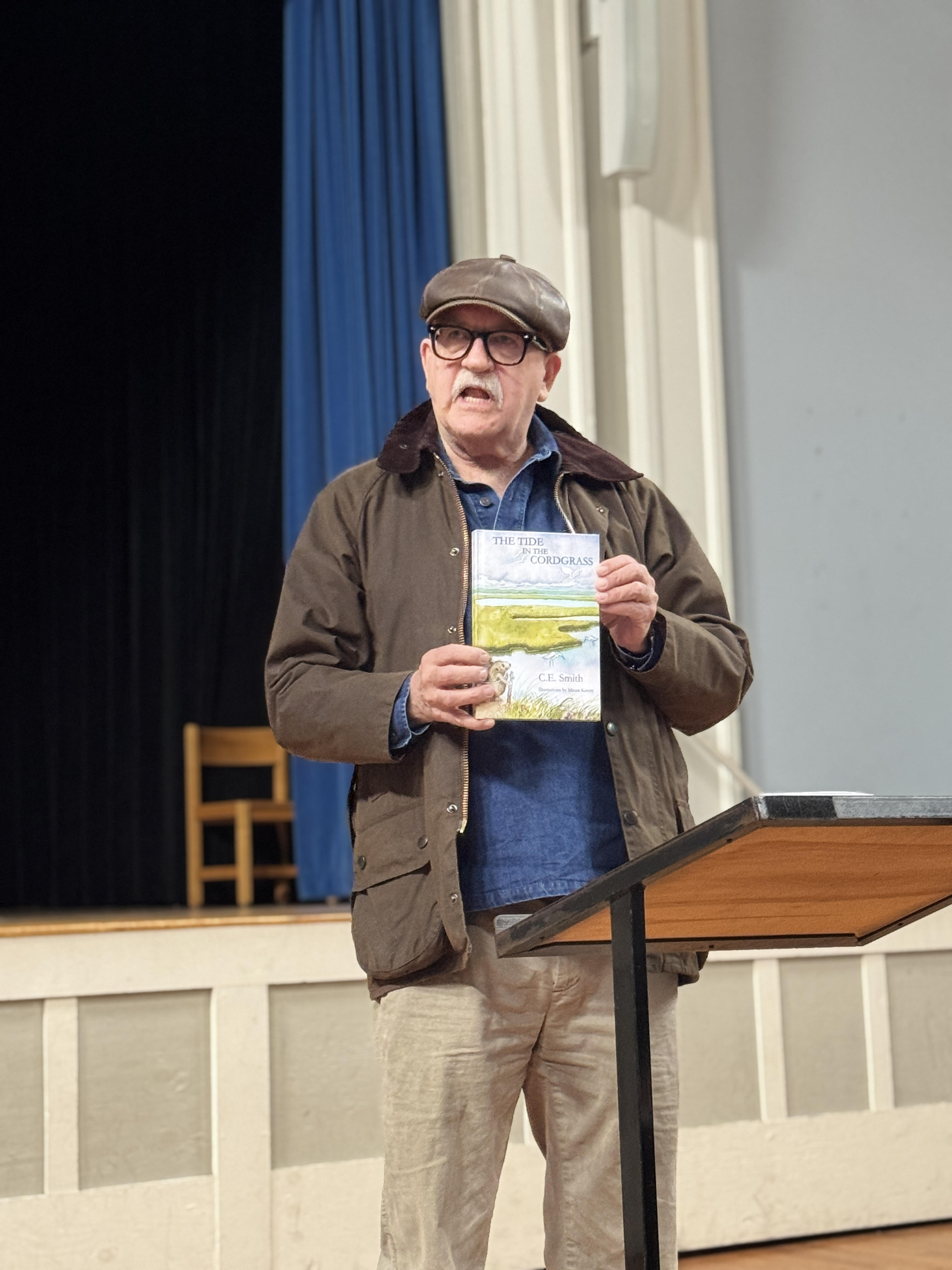
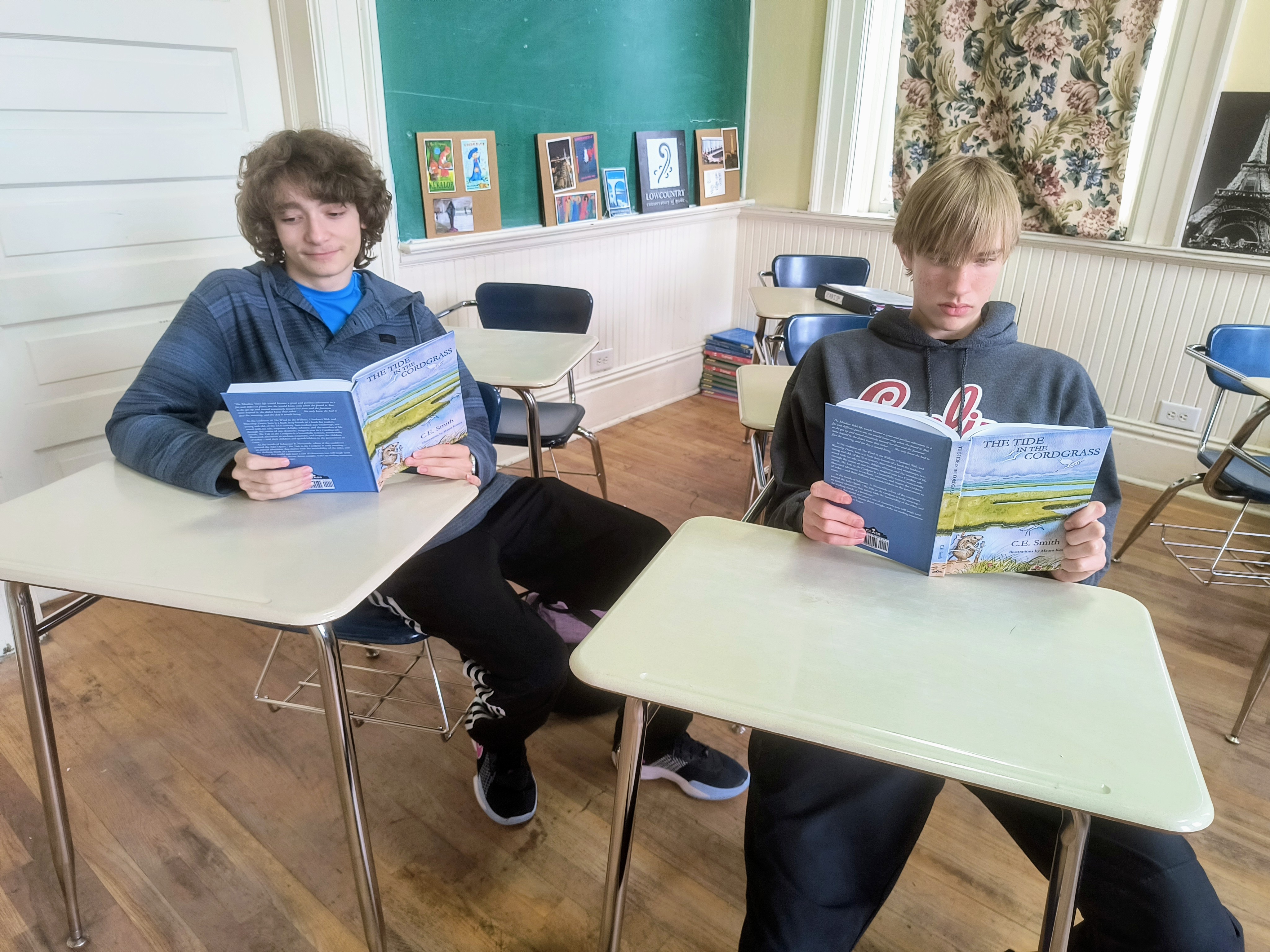
Our guest today at Open Forum was author, journalist, and activist Chip Smith. Mr. Smith has lived in Murrells Inlet for many years and although he is retired, he continues to work tirelessly on new articles and books and on conservation projects to keep Murrells Inlet as clean and pristine as possible. Mr. Smith came bearing gifts: several copies of two books he published–one for adults (A Pocket Wild: Essays from a Carolina Marsh) and one for children of all ages (The Tide in the Cordgrass, 2025).

Mr. Smith graduated from UNC-Chapel Hill with a double major in Geology and Physical Anthropology. He explained to us that physical anthropology studies “the physical traces in our bodies of the evolution of the human species” using evidence such as bones and teeth. “But geology to me is the most fascinating,” he said, “because geologists can read the history of the earth.”

Mr. Smith’s active career was as a newspaperman and photojournalist. Today he is a science and nature writer for the local community. He continues to use his scientific training to inform his writing about nature and make science more understandable to the average person. “Scientists are not good at communicating their findings,” he said.

Mr. Smith shared some of his two books with us. One of his essays in A Pocket Wild is about Roosevelt Pickett, a Black man who worked for Oliver’s Lodge in Murrells Inlet ever since he was nine years old and who knew many things about the marsh. He was Mr. Smith’s neighbor and best friend. “Any person who ever met Roosevelt would never forget him,” he told us. He also read some excerpts from The Tide in the Cordgrass, an animal story set on the marsh in Murrells Inlet. There is a character called Clarence the Kingfisher, King of the Creek, and Mr. Smith was delighted to learn that the Kingfisher is our mascot.

We were delighted to meet Mr. Smith! He has since invited us to participate in the Spring Tide Clean-up of Murrells Inlet on Sunday, May 3. We look forward to that and to reading his books. Thank you, Chip Smith, for the talk and the books!

February 4, 2026: Laura Sonius

Our school has a new friend: Ms. Laura Sonius. Ms. Sonius paid us a visit at Open Forum on January 21, 2026. She wanted to get to know the student body better and to tell us about her passion for education. Ms. Sonius has offered to help TGS with funds for improved classrooms, lab, and equipment.

Education is extremely important to Ms. Sonius’ whole family. Her Jewish grandpa escaped the pogroms in Russia and took refuge in America. At first, he traveled around working different jobs until he got tuberculosis and was disabled for two years. During this time, he read lots of books and educated himself so that he could better his family’s life. He created a very successful packaging material company. Her other grandfather was a hard worker who, after graduating from high school and working as an accountant, returned to college and became a lawyer. Thanks to her family history, she places a great emphasis on the value of schoolwork and college attendance as pathways to opportunity. She also takes her stewardship of the family legacy very seriously: “I was raised to help those who can’t help themselves,” she told us.

Ms. Sonius attended college, got a degree in English writing, and became an editor in Boston, before finally returning to school to get her teaching degree. Her experience in teaching has given her an even deeper appreciation for the needs of our education system. Ms. Sonius said that she saw great potential in each and every one of us at TGS.  She is graciously providing our school with extra funding for things like a state-of-the-art laboratory. “Buying fancy clothes and driving nice cars does nothing for others,” she said. “Education is my passion.” Thank you, Laura Sonius, for speaking with us and for your generosity!

By Nolan

December 10, 2025: Gabby Geathers

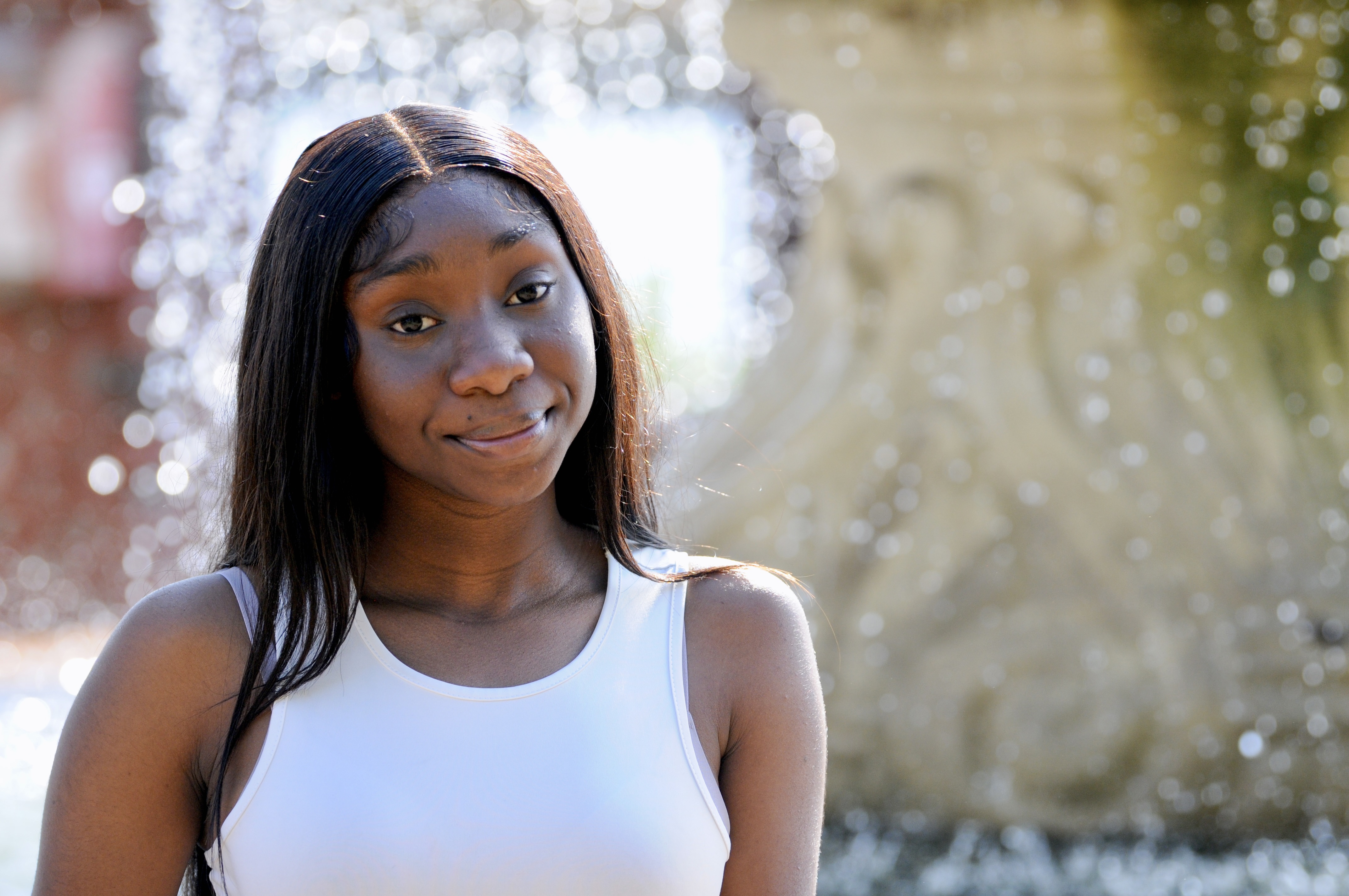
Gabby Geathers, Class of 2025, was our guest speaker at Open Forum today. Gabby attends Horry-Georgetown Technical College where she is studying to become a radiology technician. She was nearing the end of her first semester and told us that she was enjoying the program.

Gabby said that the classes were pretty easy because she was well-prepared. One thing surprised her a lot: she is now the one helping all the other HGT students in math! Our students asked her if she had any advice. “Don’t get behind in your work,” she said. “You have to be your own parent!” Good luck with the spring semester, Gabby!

December 3, 2025: Yorky Burnas-Arnold

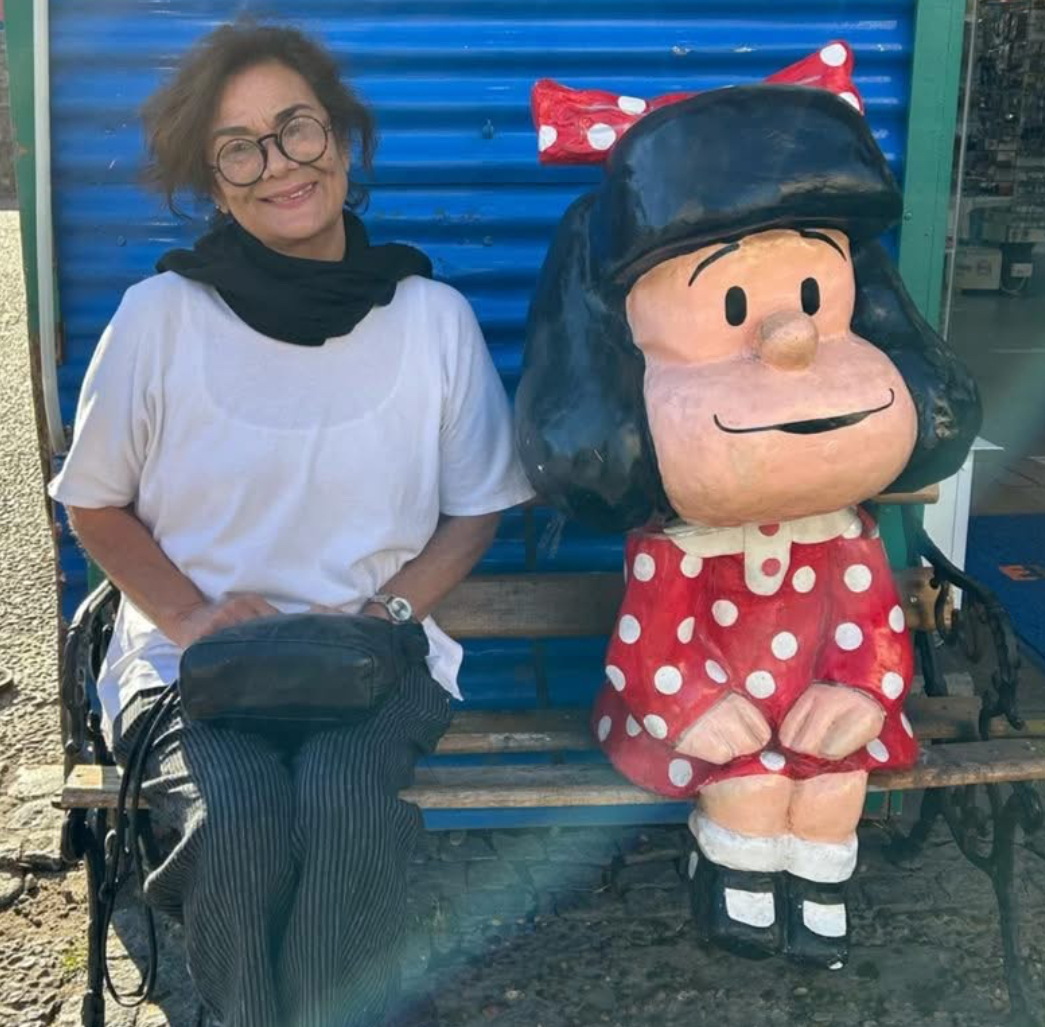
Today we welcomed Señora Yorky, who left our school after 13 years of service to go back to Chile and care for her aging father. Señora Yorky was in the States to visit her daughter Paolina and other family members.

Yorky enjoys a trip to Argentina.

“I’m so happy to be here!” Señora said. She told us about her life these days, caring for her father with her sisters and adjusting to life back in Chile. She shared lots of fact about Chile and the students began to ask a lot of questions, particularly about food. “In Chile, we eat a lot of meat,” she told us. “My favorite is empanadas or meat pies that you can buy from sellers on the street.” It was a bit of a culture shock for Señora Yorky to re-adjust to life in Chile after 30 years in the U.S. She told us that Americans are less affectionate and demonstrative than Chileans–the people of Chile are more open.

Señora Yorky spends most of her time with her family (especially her dad) but she has been able to do a little traveling, notably to Argentina. She decided to start classes to become a clown, just because it would allow her to try something totally different. “I love it!” she told us. We want to thank Señora Yorky for her visit and all the wonderful memories she left with us. We miss you!

By Kipper

November 19, 2025: Bob Willey

Dr. Robert J. Willey was our guest today. Bob and his wife Carol have been retired in Georgetown for 11 years. They moved here from Massachusetts where he worked as professor and dean at Springfield College. After teaching philosophy and history for 42 years, he decided he wanted to do something different. He decided to help out the citizens of Georgetown in a special way by becoming a friend of our library here.  The Georgetown Friends of the Library funds the free programs at the public library such as children’s reading group programs, adult arts and crafts, and many more free activities for the patrons. Bob was determined to get the Friends’ group going and he has succeeded!

Bob is very interested in Black history and in particular the story of abolitionist Harriet Tubman, an escaped slave who worked to help other slaves find their freedom on the “Underground Railroad.” Bob and the FOGL were responsible for finding funds to bring Wesley Wofford’s Harriet Tubman: The Journey to Freedom sculpture Georgetown two years ago. The statue was on display at Lafayette Park where we as a school were able to walk down and visit it.

Bob explained that Harriet Tubman saved her own family from being separated. Her grandnephew James Bowley ended up becoming a great free black man. “He was appointed to run Georgetown’s freedmen’s bureau,” Bob told us, “and he served in the Union Navy.”

Bob told us that the FOGL is working on an exciting new project. They commissioned a small statue from Wesley Wofford to be called Whispers of My Ancestor. It will show Harriet Tubman encouraging the young James Bowley to aspire to great things. The statue will be near the children’s section where anyone can go over and touch it and be inspired. The FOGL has already raised the $40,000 necessary to make the statue a reality.

Best of luck to the Friends of the Library and their awesome leader Bob Willey!

By Larson

November 12, 2025: Kristi Kinslow

On November 12th, our school had the opportunity to hear from Kristi Kinslow, the Director of Pre-Professional Studies and Recruiting Manager from the University of South Carolina (USC) College of Pharmacy. She spoke with us about the process of becoming a pharmacist through the USC Pharm.D. Program. This program, which has been around for over 150 years, is the oldest and most established pharmacy college in South Carolina. Admissions are highly selective and competitive with only about 100 acceptees per year.

To become a pharmacist through USC, students must complete at least a total of 6 years of education. The first two consist of pre-requisite courses, which may be taken at another institution. After that, students enter the four-year Doctor of Pharmacy (Pharm.D.) program. This program is a professional doctoral degree, and is one of the fastest paths to earning a doctoral degree. Kristi explained that there are over 30 different fields within pharmacy, and a single Pharm.D. degree qualifies graduates to work in any of them. “This degree allows you to constantly change your field,” Kristi said, “the sky is your limit.” 

She also emphasized that a career in pharmacy offers flexibility, versatility, and a competitive salary. Additionally, the USC College of Pharmacy provides students with a strong network of engaged alumni, who can open doors to numerous professional opportunities. Kristi also noted that the role of pharmacists especially became visible during the COVID-19 pandemic, when they served on the front lines of healthcare. In reality, she reflected, “people didn’t even acknowledge how much pharmacists did until COVID.” We now better recognize the vital role of pharmacists in medicine. 

By Eleanor