 by
by

The TGS school trip began Tuesday at 6:00 AM, February 26, when Sherrie (our bus driver from last year) pulled up on Cleland Street. After loading up and saying goodbye to parents, it was quiet on the bus, because everyone was tired and most of them went back to sleep. It soon became clear we were heading south—Florida? We had multiple stops for bathroom breaks. The back of the bus, where all of the high school was, didn’t get as much peace as they would have liked, because a couple of middle school rascals were spraying Axe deodorant and discussing Vietnam. “It was not a totally pleasant experience,” said Bryan.
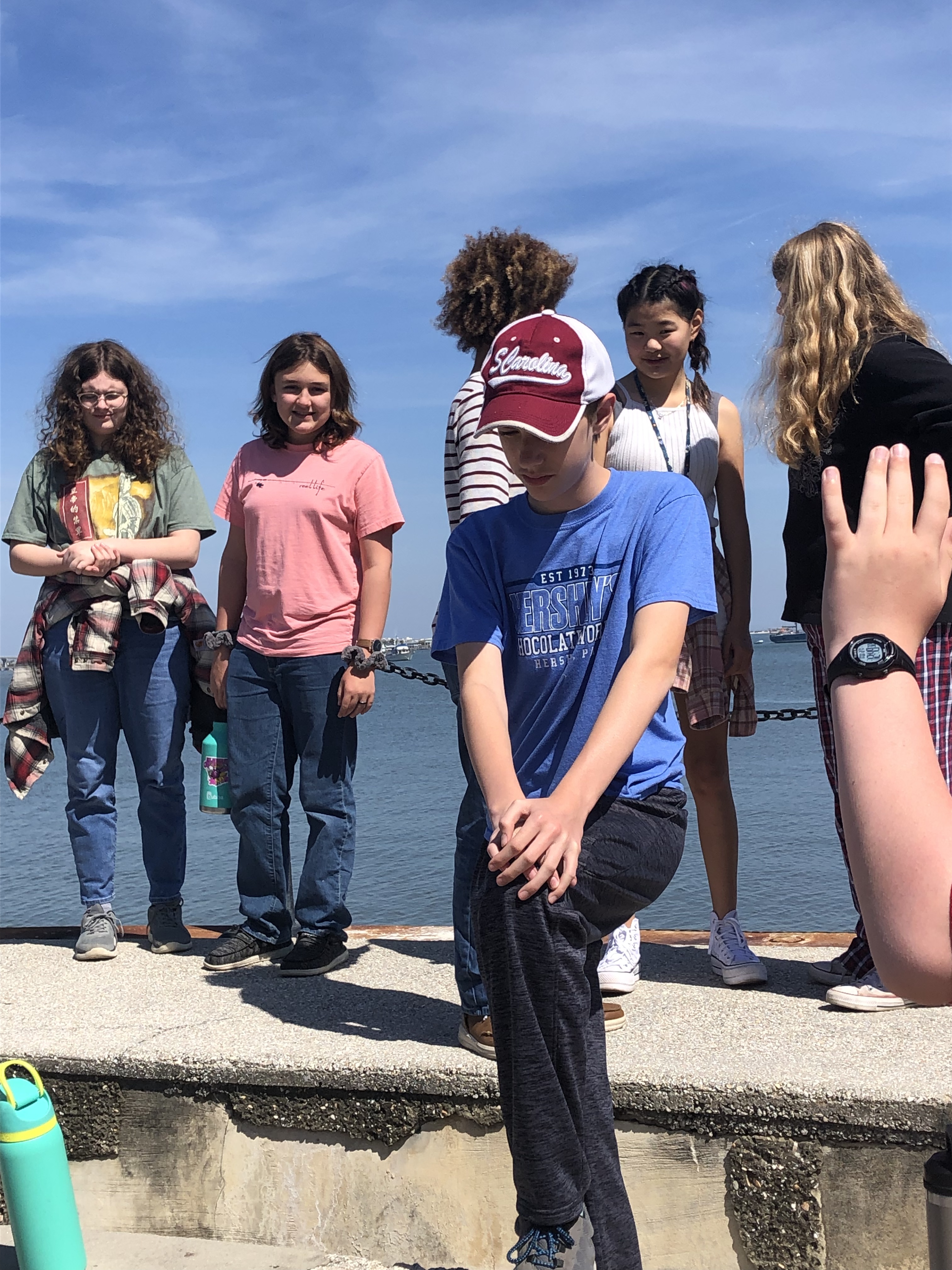
Our first stop was St. Augustine, the oldest city in the U. S. Right before we got there, Dr. Gates divided us into four teams (led by a junior or a senior) for our annual Team Challenge. We headed over to visit the Castillo de San Marco. One of the park rangers told us that we only had thirty minutes to walk around so we’d “better not waste time in the bathrooms.” Dr. Simmons supervised the tour inside. “You, read this plaque!” he told different students as we went from room to room. Once we had finished walking through all the open rooms, we climbed to the top of the fort. There we had an amazing view of St. Augustine and the ocean. There were also a few guard towers that everyone tried to squish into.

After seeing the fort, we strolled through downtown of St. Augustine to the Lightner Museum. Our tour guide was named Bill and he was excellent. Bill told us that Henry Flagler was the man behind the building. The building first started out as the Hotel Alcazar. It was fitted for the rich but closed in 1931 due to the depression and ensuing war. Otto Lightner purchased it fifteen years later and turned it into a museum for the very odd collection of items that he had purchased throughout his lifetime. We saw all kinds of strange objects: many different seashells, minerals, musical instruments, taxidermy. There was even a baby mummy from the Egyptian era (no photos or videos were allowed of the mummy). The museum also featured a taxidermied lion named Rhoda that used to be owned by Winston Churchill. “I kind of felt like we were at Ripley’s,” said Gracin.

The Hotel Alcazar used to have an indoor pool, fed from a sulphur spring. We saw that this area is now a small café. Above the café are two more stories that feature Art Déco furniture and very fine pottery. The hotel also had a sauna that was exclusive to men and was perfectly preserved. Bill closed our tour by showing us a giant painting of the Three Fates. The painting expressed how human life hangs by a thread. “It was quite unsettling,” said Sage. Outside of the museum in the courtyard was a little pond that was full of very large koi fish. We tried to feed them but the pellet dispenser just kept taking our quarters. Except for losing a few quarters, the Lightner Museum was a great experience!

When we left St. Augustine, we headed towards Port Orange to spend the night. Port Orange had fine dining for us: dinner at Chick-fil-A! The employees made our meal a good experience. They had us go ahead and sit down, then came around for our orders. We were able to relax, talk, and enjoy a nice meal. They did a fantastic job.
After Chick-Fil-A, we walked to the Port Orange La Quinta hotel. It was a nice hotel, and even had a pool. Corrin said, “The hotel was a nice break from the bus.” The interesting thing about the hotel was that some of the rooms were connected by doors, which led to some shenanigans. After everyone got settled, some went down to swim in the indoor pool. We then went to sleep. The next day we had to be ready early, so we ate our breakfast pretty quickly and loaded up the bus.

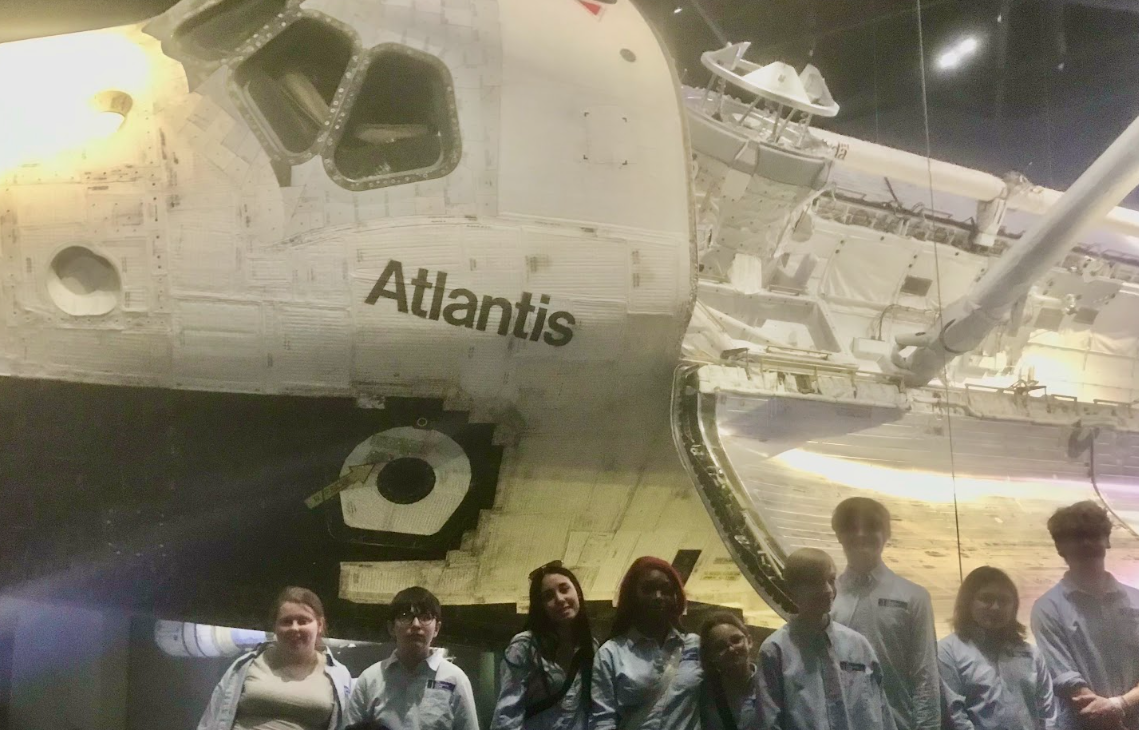
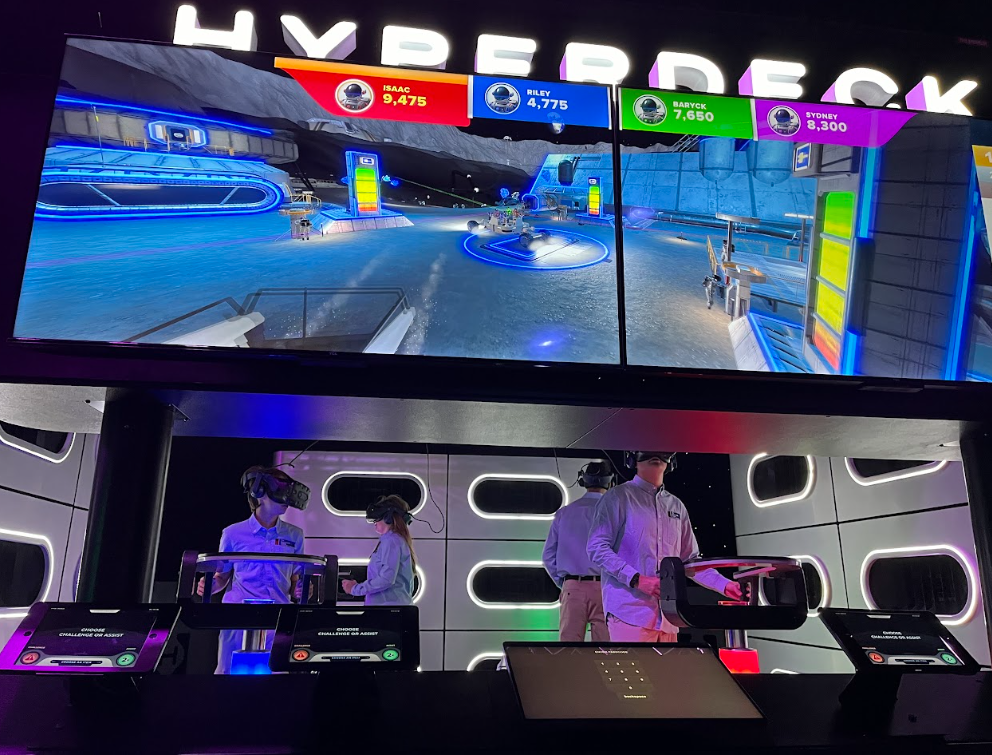
On the second day we went to the Kennedy Space Center Visitor Complex in Cape Canaveral. Students were thrilled when they realized where we were going. Cries of “Yes! Yes! Yes!” were heard from the back of the bus. “I was smiling so much,” said Larson. “My cheek muscles hurt!” Approaching the visitor complex, we could observe the gargantuan rockets in the Rocket Garden. It was a cool and bright day, and the entrance to the complex was very intriguing, with a massive screen displaying John F. Kennedy’s passionate speech about going to the moon. After going through security, we were finally able to explore the complex. We started with a guided tour of the Rocket Garden. We learned that all of the rockets are real, and the majority of the rockets displayed were repurposed military rockets. After the garden, we split up into groups guided by one teacher and went into a museum which contained a variety of displays featuring rovers and rockets. A favorite attraction was the Space Shuttle Simulator, which Dr. Neubauer dubbed “The Shaken Baby Syndrome Simulator.” Students also enjoyed the gift shop, spending too much money on things like space helmets and space food. Corrin became The Gastronaut. We also had special appointments to do the Hyperdeck, a VR experience on the moon, which students really liked enjoyed.

Lunch was a picnic from our coolers in the picnic area of the KSC. It was a bit of a challenge, between the blazing sun and marauding birds, but we were well-fed and soon back on the bus, en route Gainesville.
After dark, we stopped on the campus of the University of Florida to go one of their cafeterias for dinner. The food was at different stations and there was a lot of variety. It did not take long for everyone to serve themselves and sit. The food was quite decent and some of the UF students were willing to talk to us. We were amazed by the size of the campus—it has 900 buildings!

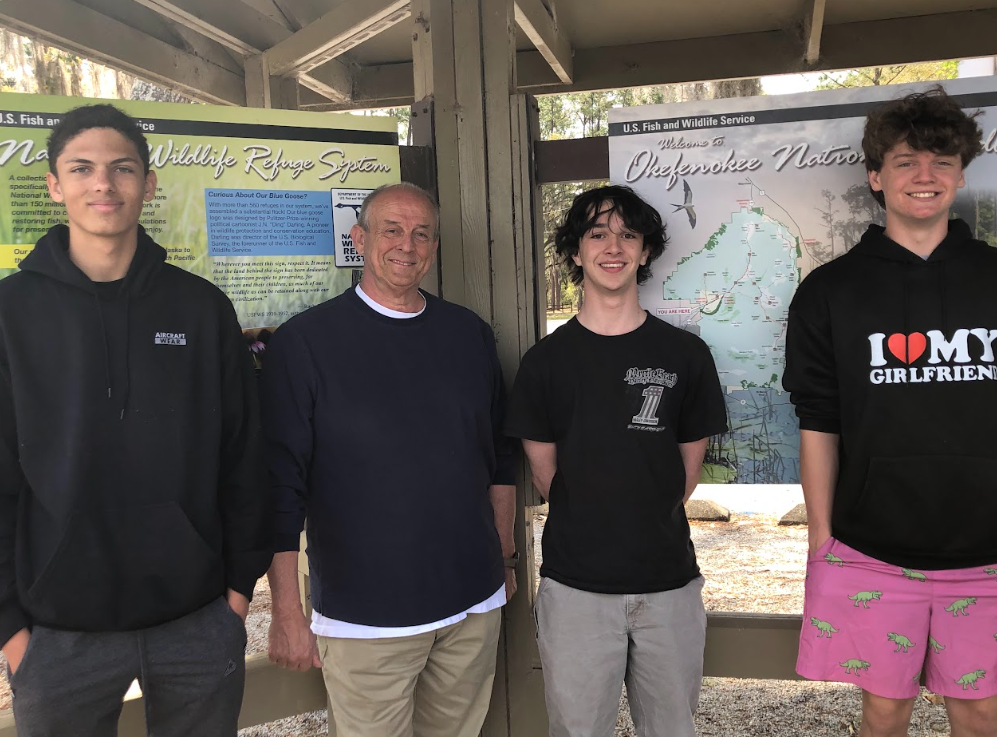
By the time we finished, everyone was getting tired. We boarded the bus and headed out to what seemed to be the middle of nowhere. Our destination truly was the middle of nowhere—the Stephen C. Foster State Park in the middle of the Okefenokee Swamp. There was no light out there—just the stars. The bus pulled up into a row of cabins and we jumped off when our names were called—about ten people per cabin. The cabins had everything we needed: beds with sheets and blankets, fully-equipped kitchens, decent bathrooms and large porches. This is where we stayed for the next two nights.
On day three of the trip, we were allowed to sleep in a little bit in the absolute quiet of the Okefenokee. “That was the best sleep I ever had,” said Annika. Dr. Gates’ cabin hosted everyone for a delicious breakfast of bacon, eggs, cereal, fruit, and juice, prepared by Dr. Gates. Students brought their own plates and forks, went back for seconds, then took their plates back to wash. The day was cloudy and warm so after everyone got cleaned up, we headed outside. The Trading Post of the State Park attracted a lot of customers when it opened at 9:00.


Later in the morning, we gathered on the dock with state park rangers Alex #1 and Alex #2, who gave us each a paddle and a PFD. We partnered up and launched the canoes into a short canal leading to the swampy headwaters of the Okefenokee River. As soon as we turned the corner, we ran into wind and a strong current which made paddling extremely challenging. Some of the younger students turned back and some had to be helped back by Mrs. Crosby and Alex #2 in their kayaks.

Everyone else struggled up the river, admiring the sights and paddling like crazy. There were huge alligators all over the banks, and shore birds such as green herons, blue herons, night herons, curlews, cormorants, eagles, and buzzards. After fighting the water for a long time, we arrived at Billy Island and dragged our canoes up on the bank. It felt good to be on dry land! We wandered around and Dr. Gates gave us chocolate and water because we were missing lunch.
Alex #1 gave us a tour of the island, which is now deserted. But in the early 20th century, it was home to a settlement of 600-700 people who worked harvesting timber and naval stores. Billy Island shut done when all the trees were gone. We saw the remains of a railroad, an old car, and a water tank for the boiler.

The paddle home was a wonderful dream. We relaxed back and let the current carry us back to the Trading Post. “We still had to steer and avoid alligators,” said Baryck, “but it was a lot easier.” Dr. Simmons had taken those left behind back to their cabins. We were all dirty, cranky, and tired so we took a moment to shower and get cleaned up.

Dinner was early since we missed lunch, hosted by Mrs. Crosby and Mme Gates’ cabin. Dr. Gates served up roasted chicken breast sandwiches, beans, and potato salad to hungry students who turned up with a plate, fork, and knife. The MS occupied the picnic table behind the house, where they ate and played cards as it grew dark. HS relaxed on the porch and in the living room. Everyone eventually went back to their cabins, but some people visited other cabins to play cards or chat until lights out. People were very tired and we had an early start Friday for our trip home.
After having breakfast on Friday, everyone cleaned up the cabins, and loaded their luggage onto the bus. Once everyone and everything was on the bus, we started heading back to Georgetown. Many people spent the ride napping or talking with the people around them. Some of the middle schoolers even had a camera and were taking silly pictures of each other. The first stop we made was at a Pilot gas station, so people could use the restroom or get snacks and drinks. There were also many interesting items that students could buy, such as magnets, toy cars, and even taxidermied alligator heads, as well as several places where students could get food, such as Cinnabon and Subway.
After getting back on the bus, the seniors were given the privilege of deciding where we would have the final meal of the trip. After a brief discussion, they agreed on Zaxby’s. Dr. Gates then announced a tie-breaker challenge, since three of the teams were tied. For the challenge, he asked five questions, and each team was given one chance to give the correct answers, and whichever group got the most correct answers won. After having lunch at Zaxby’s, Dr. Gates announced that the teams would have until we passed McClellanville to submit their answers for the tie-breaker challenge. After teams had submitted their answers, Annika’s group was declared the winner. “My team has never won,” she said, “It was great to finally win after eight years!” A short while later we arrived back at school, and the tired Kingfishers gathered their luggage and left to go home. All in all it was a great trip.
 The Georgetown School
You must be logged in to post a comment.