 by
On October 21, we had the pleasure of welcoming Beatrice Rodrigues of the Gullah Museum. Ms. Rodrigues is a historian who is dedicated to preserving the history of the Gullah Geechee people. She also serves as a co-chair of the Middle Passage Ceremony and Port Markers Project. Ms. Rodrigues’ presentation at Open Forum brought an often painful chapter of history closer to home, revealing the deep connections between the slave trade and the history of Georgetown. The first enslaved people began arriving through the Middle Passage in 1526, exactly 500 years ago.
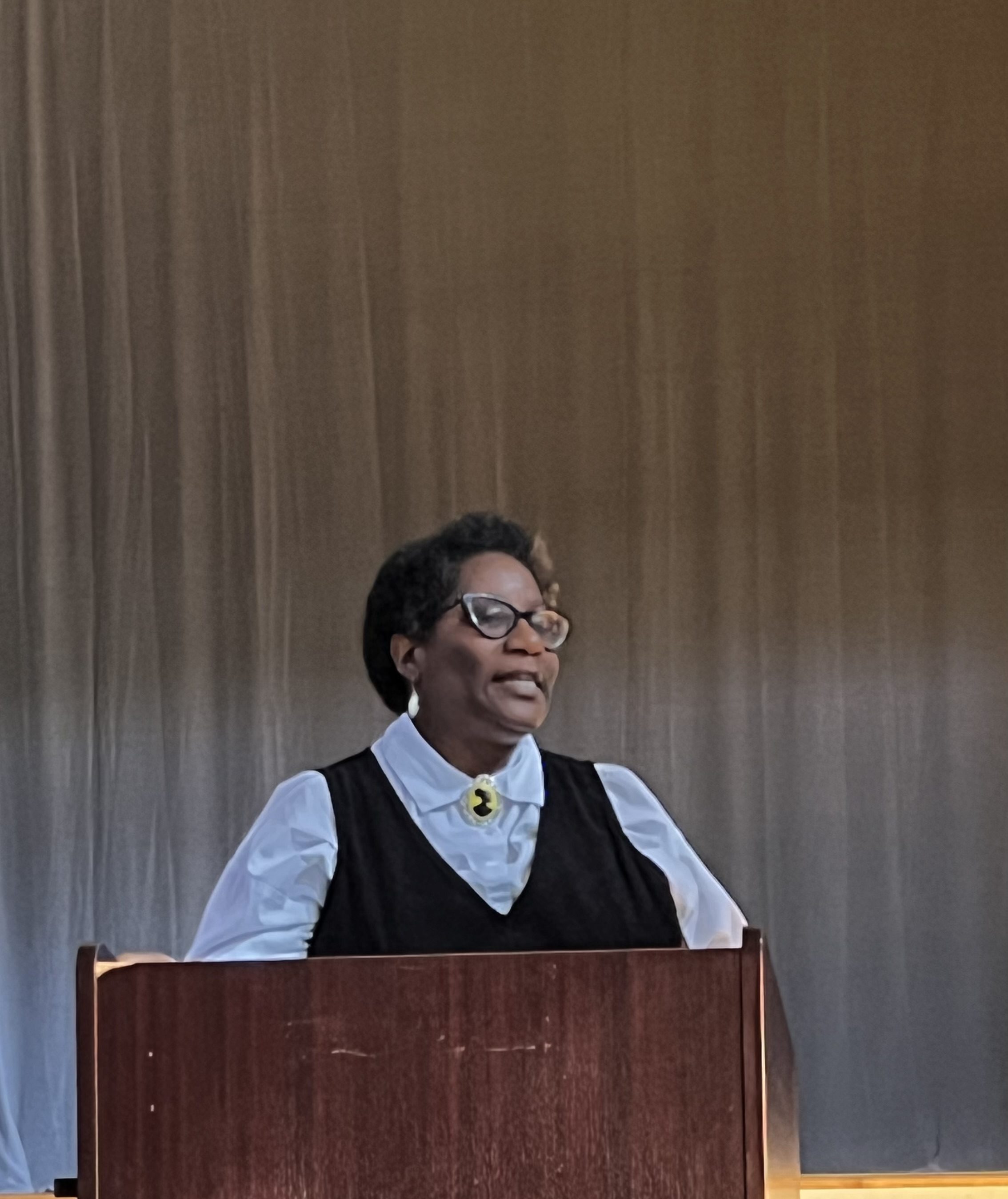
Ms. Rodrigues told us that the Middle Passage was the forced voyage across the Atlantic Ocean endured by millions of Africans who were kidnapped, sold, and transported into enslavement. Approximately 12.5 million Africans were forced onto ships during the transatlantic slave trade, and about 10.7 million survived the voyage. Behind these numbers were individuals whose names, families, and personal histories were often lost. Ms. Rodrigues told us that these individuals had lives before enslavement, including communities they loved, knowledge they carried, and futures that were taken from them. Their identities did not begin with their captivity, and nor should their stories end there.
Ms. Rodrigues’ work helps recover their stories. Using historical shipping records, she examines individual voyages, dates, ports, ships, and whatever documentation has survived. These records help us better understand the people caught in this system, as well as the individuals who profited from it. Ms. Rodrigues taught us about four ships that brought captives to Georgetown: the Warwick in 1737, carrying eight captives; the Endeavour in 1738, carrying 30; the Susanna in 1767, carrying 13; and the Betsey in 1784, carrying 19.
The Middle Passage Ceremony and Ports Marker Committee works to highlight the 500th anniversary of this infamous route. Thanks to the commmittee’s efforts, Georgetown’s boardwalk is now home to a new historical marker which will educate the public about Georgetown’s role in this part of history. Ms. Rodrigues’ work helps ensure that the stories of those who endured the Middle Passage are not forgotten and that future generations understand how this history continues to shape our region.
The Gullah Geechee people and their cultural heritage remain an essential part of our region’s identity. Their agricultural expertise, language, food ways, traditions, and community practices reflect generations of African cultural influence, adaptation, and resilience.
By Eleanor; photos by Willow
You must be logged in to post a comment.