We did not have a scheduled speaker today, but Dr. Gates took the podium for some announcements and to present two awards. Our school had two winners in the Georgetown County Soil and Water Conservation essay contest. Hannah took second prize and received a check for $25. Nathan was first and got a check for $50. “We are very proud of Hannah and Nathan today,” said Dr. Gates. He went on to encourage students to get all their missing work in before exams. “The end of school will be here before we know it,” he said.
Dr. Gates ended Open Forum with a surprise announcement—starting the next day, he would no longer be downstairs taking students’ temperatures on the way into school. Students immediately applauded but some had mixed emotions about the development. “I feel like he cut us off cold turkey,” said Isaac. Others, like Annika, were excited. The shift definitely marks the end of an era.
On Wednesday, May 5, we had our first Open Forum of the year. Our guest was Isabella Neubauer, a graduate of our school. She has been a student at Washington University in St. Louis for 3 years. Before orientation her first year, she signed up for Freshman Press, a Journalism group that covers freshman events on campus.
“That was when I knew I wanted to do journalism,” Isabella said. She started out writing in the Featured and Art and Entertainment sections of the school newspaper Student Life (also known as “Stud Life”). The next year, she switched to being a copy editor, reviewing and correcting mistakes in other writers’ articles. She also continued writing for the Art and Entertainment section.
Isabella, Ethan, and Naomi have a joyful reunion.
When the pandemic hit, it became hard to make newspapers since no one was on campus to read them. The staff soon switched to digital. Isabella is now a managing editor of the online version of Student Life. She gets to choose topics for articles and runs a staff of 50 students.
Isabella’s visit helped us understand college more and it was great to see how much she enjoys her major. Thank you, Isabella, for educating and inspiring our students.
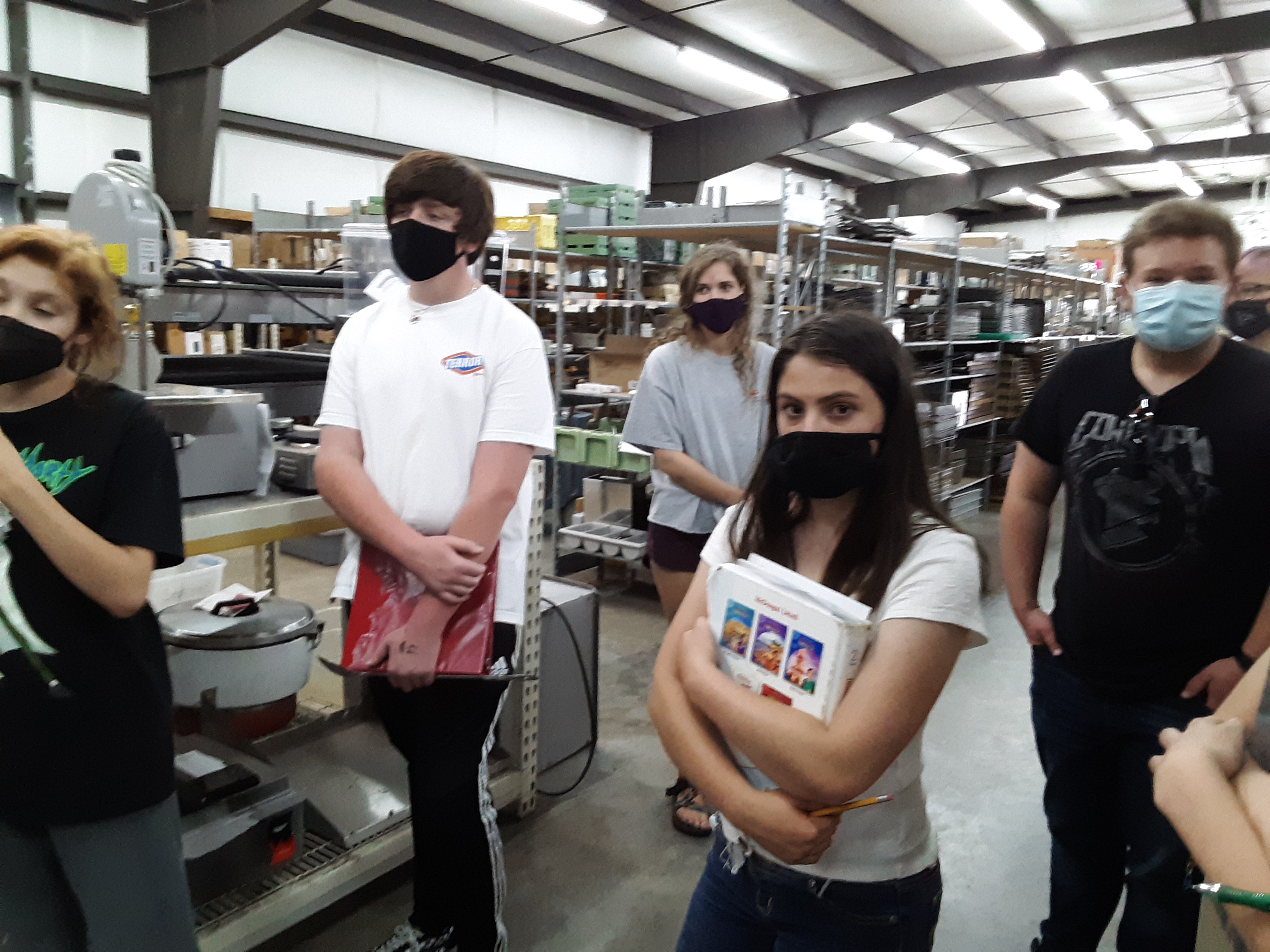
On Wednesday, May 5, the Personal Finance class took a field to trip to PoBoy’s Restaurant Discount to see what this small business was all about. We were standing in front of an ugly blue machine made of cast iron near the front of the store. It was a pot-bellied contraption with an opening at the top. It was lined with abrasive rock, and we could see that it rotated and used steam from two valves.
“I have a prize for whoever can tell me what this is for,” said Rodney Long, who with Dwayne Christensen owns PoBoy’s Discount. The kids debated for awhile, then T.J. came up with the correct answer. “Is it a potato peeler?” he asked. “Yes,” said Rodney. “We got this bad boy from the Navy.” He then gave T. J. the promised prize—a cafeteria serving spoon.
Finding out that there are industrial potato peelers is just one of many surprises that await the visitor to PoBoy’s. Rodney and Dwayne deal in used restaurant equipment, a service that helps entrepreneurs get started in the restaurant business without laying out a lot of cash for freezers, stoves, and other machinery. Rodney explained that restaurant equipment is built to last and does not depreciate in value that much, so buying used is often the best idea. If the restaurant fails (and up to 50% of them do within five years), PoBoy’s will buy the equipment back to resell. This allows the restaurant to recoup some of its losses.
Among the other weird and wonderful machines we saw were a bun-butterer, a hugely expensive steamer, and stand mixers that can handle a bazillion gallons of batter at one time. There was even an abstract statue of Bob Marley with twisted metal for dreadlocks from the now-defunct Hard Rock Park in Myrtle Beach.
If you have a hard-to-buy-for friend or family member with a birthday coming up, check out PoBoy’s for a gift. The strange selection of stock always has something no one would ever think of! Thank you, Rodney, for the great tour!
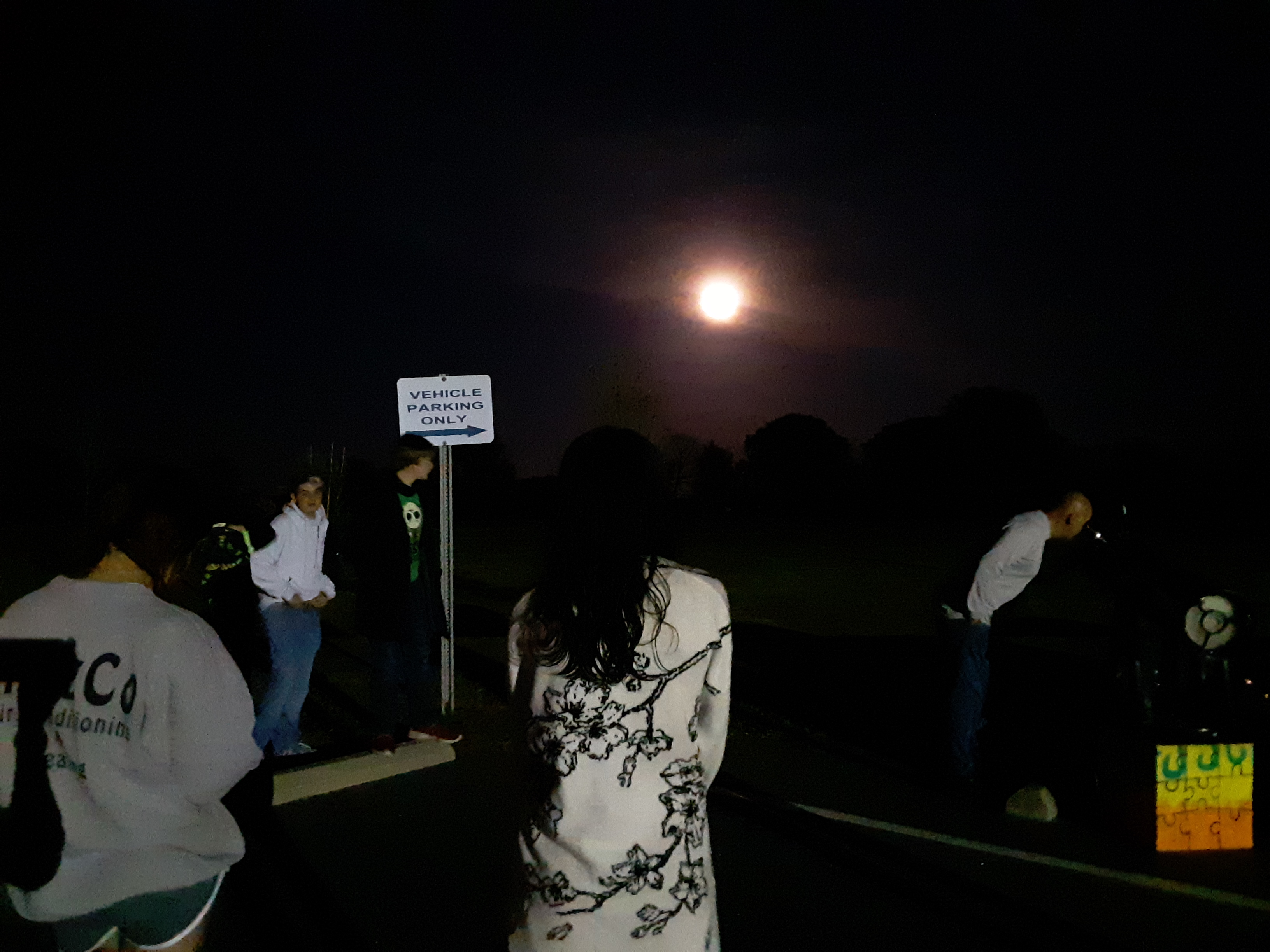
On Monday, April 26, several members of the Astronomy class met Dr. Gates at East Bay Park at 8:30 in the evening. Dr. Gates had set up the school telescope so they could look at the Moon. In Astronomy class, the kids have been closely following all celestial events including the landing of the Mars Rover Perseverance and its helicopter Ingenuity.
This particular night was very interesting because there was a Pink Super Moon. The Pink Super Moon appears 7% larger and 15% brighter because the moon is at its closest point to the Earth and we see it magnified through the Earth’s atmosphere. It was a very good night for observation.
Bristol, Isadora, William, Evan, and Nathan lined up to take their turns at the telescope eyepiece. The Moon was amazing clear and bright. The kids could see craters and shiny patches and shadows. Dr. Gates and Bristol were able to take some pictures with their phones through the lens.
As the Moon continued to rise, Dr. Gates turned the telescope towards the Big Dipper and focused it on the star at the end of the “handle.” Through the telescope, the kids could see that this star is really two stars (Mizar and Alcor). Mizar and Alcor revolve around each other—they are called a binary.
The Astronomy moon watch broke up a little after 9:00, when clouds began to cover Mars and spoil the view. Thank you, Dr. Gates, for setting up the cool viewing.
With the world on pause, it’s been hard for everyone to do exciting activities and events. However, the pandemic has not stopped us from showing our artistic abilities. TGS art students participated in the Horry-Georgetown County High School 21st Annual Juried Exhibition, keeping up with a tradition Mrs. Patrick started in 2013. High school students who entered had a chance to have their artwork chosen for the prestigious show.
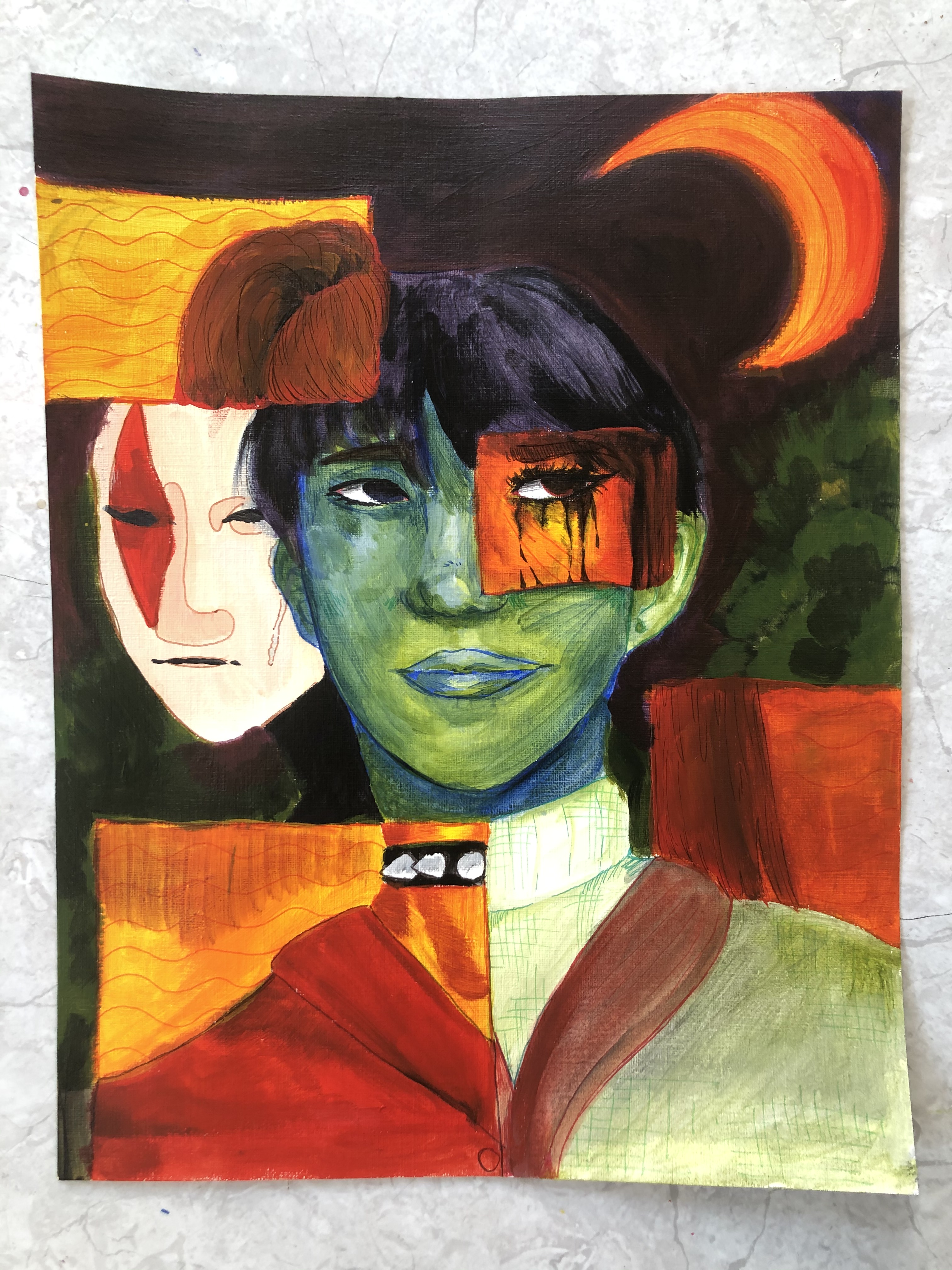
This year, ninth-grader Sagel Springs got in with an amazing painting entitled “Transition.” The work began as an art assignment which asked students to create a self-portrait with acrylic paint. Sagel knew that was the one to be submitted to the art show as soon as it was finished.
“This piece is about the huge changes I’ve made in daily life to find myself.” Sagel says. “Honestly, this portrait means a lot to me not just as an artist but as a person.”
The exhibition will be on display at the Myrtle Beach Art Museum and online from April 13-May 22. Artist and educator Yvette L. Cummings will judge all the entries. Cummings received her MFA at the University of Cincinnati’s School of Design, Art, Architecture and Planning. She is currently teaching at Coastal Carolina University. The date for the awards ceremony has not yet been announced.
“Getting into the exhibition felt good,” Sagel says. “This is the first art show I’ve not been rejected from.” At TGS, we are proud to have students who can freely express themselves. Congratulations to Sagel and Mrs. Patrick!
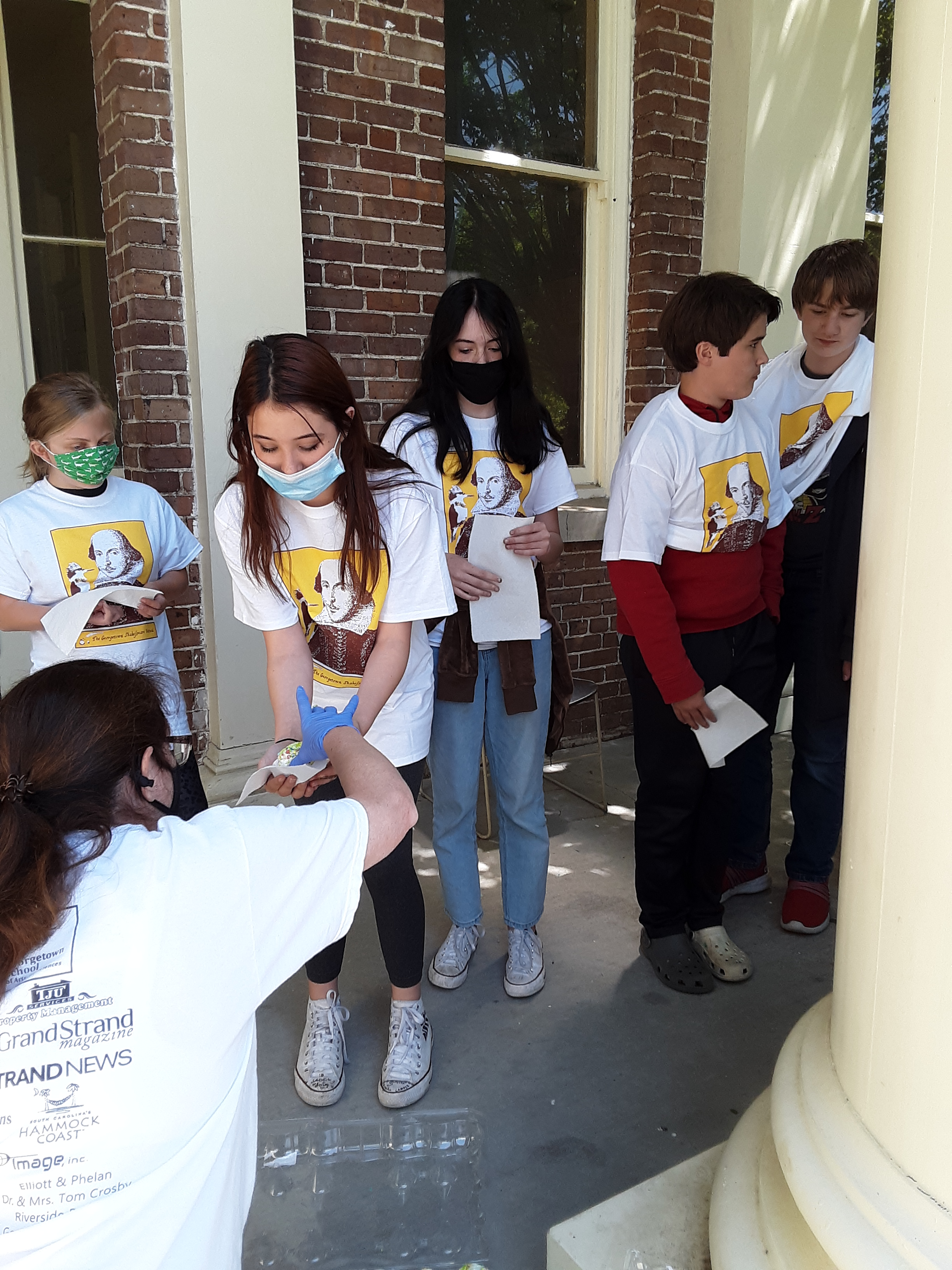
Kingfishers celebrated William Shakespeare’s 457th birthday on April 23 by donning Shakespeare Festival tee shirts and eating cupcakes provided by Mrs. Crosby. We are sad not to have been able to host the American Shakespeare Center this year for the Georgetown Shakespeare Festival. But students still enjoyed the Bard’s sonnets and Romeo and Juliet this spring in class. The eighth grade even acted out several scenes involving sword-fighting. Thank you, Mrs. Crosby!
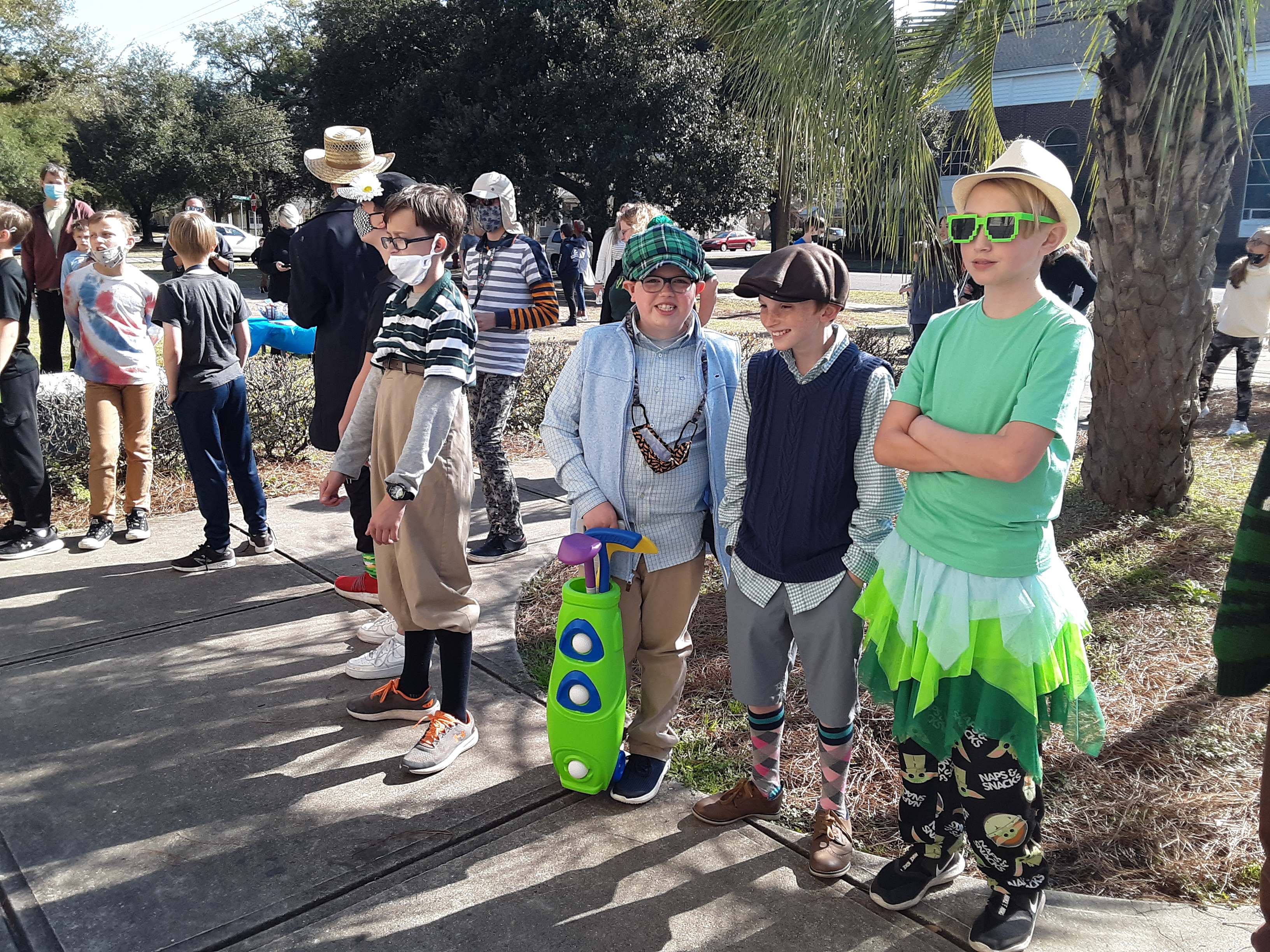
On a warm and sunny March afternoon, Kingfishers welcomed spring by having a Craziest Golf Outfit contest. The event was organized by the Kingfisher Crew (led by Ms. Sandy, Ms. Mahi, and Ms. Sheila) and was designed to publicize our Crazy Legs Golf Tournament among parents and students. Students wore their most hilarious golf outfits to school and got out of class early for the celebration.
Many people had personalized their outfits in unforgettable ways—Gracin with flowered leggings, Mason with a green skirt, Bryan with a enormous pants, Evan with s Solo cup, Dr. Gates with knickers, Jackson D. with some sort of tam o’shanter. Middle School really got into dressing up.
Kingfishers burst out of class to the front lawn at 2:30 and saw tables set up with chips and drinks and bubbles for them to enjoy, plus prizes for the winners in the categories of Cheesiest (a package of Velveeta), Hammiest (a canned ham) and Craziest Overall (a large plastic bottle full of coins). After a short parade of contestants, the winners turned out to be Evan (Cheesiest), Gracin (Hammiest), and Nathan (Craziest).
Not only did the winners get something out of this, but so did the spectators. Families who attended learned more about the golf tournament and signed up as volunteers. Students got a good snack and a fun contest. Kingfishers really enjoyed the afternoon antics.
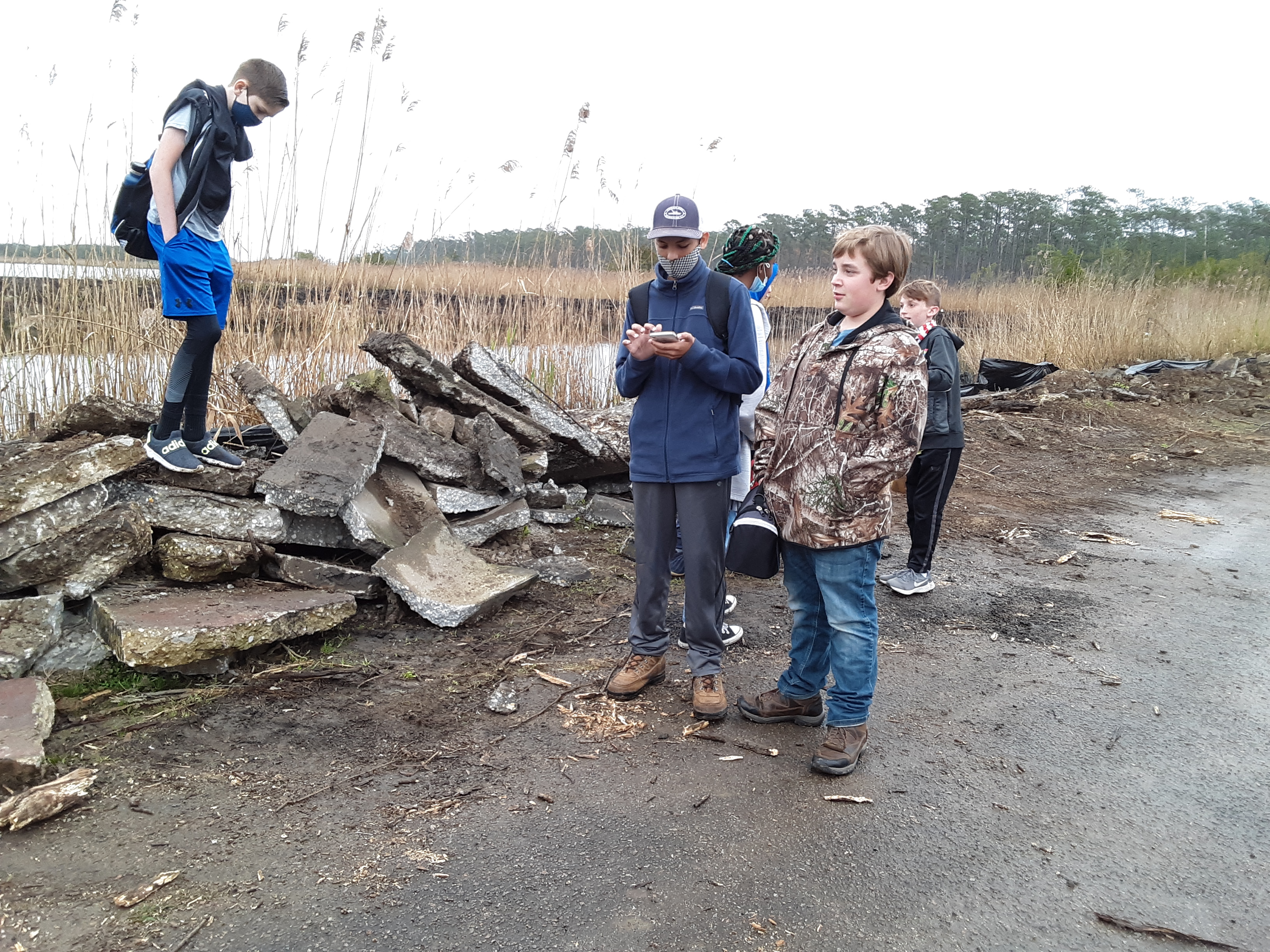
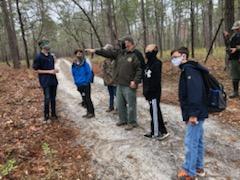
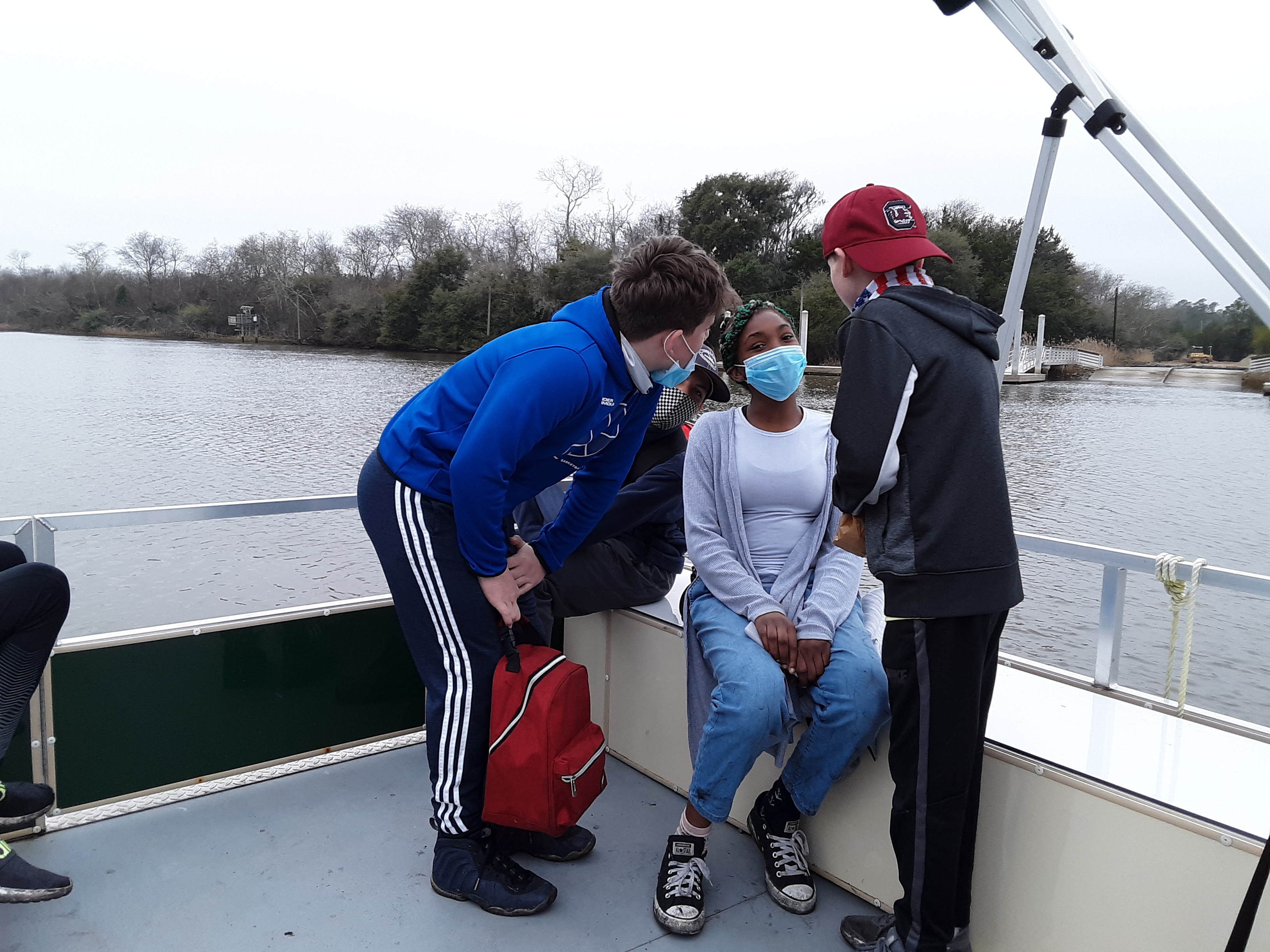
“DO NOT ENTER,” said the sign at the bottom of South Island Road. That’s how everybody on the field trip to the Yawkey Wildlife Preserve knew they were on the right road. Parents and teacher chaperons drove around the sign and parked at the South Island Landing. The group of sixth and seventh graders awaited the ferry in the chilly March air under a cloudy sky, running around the site and trying to skip rocks in the ICW.
Around 9:00, Mr. Jim Lee of DNR crossed over in the boat to pick us up and take us over the water to Cat Island. He gave us a brief introduction to the Yawkey Wildlife Preserve—31 square miles of pristine coastal land donated by noted conservationist Tom Yawkey to the state of South Carolina in 1976. Then we hopped on the bus and headed out to explore.
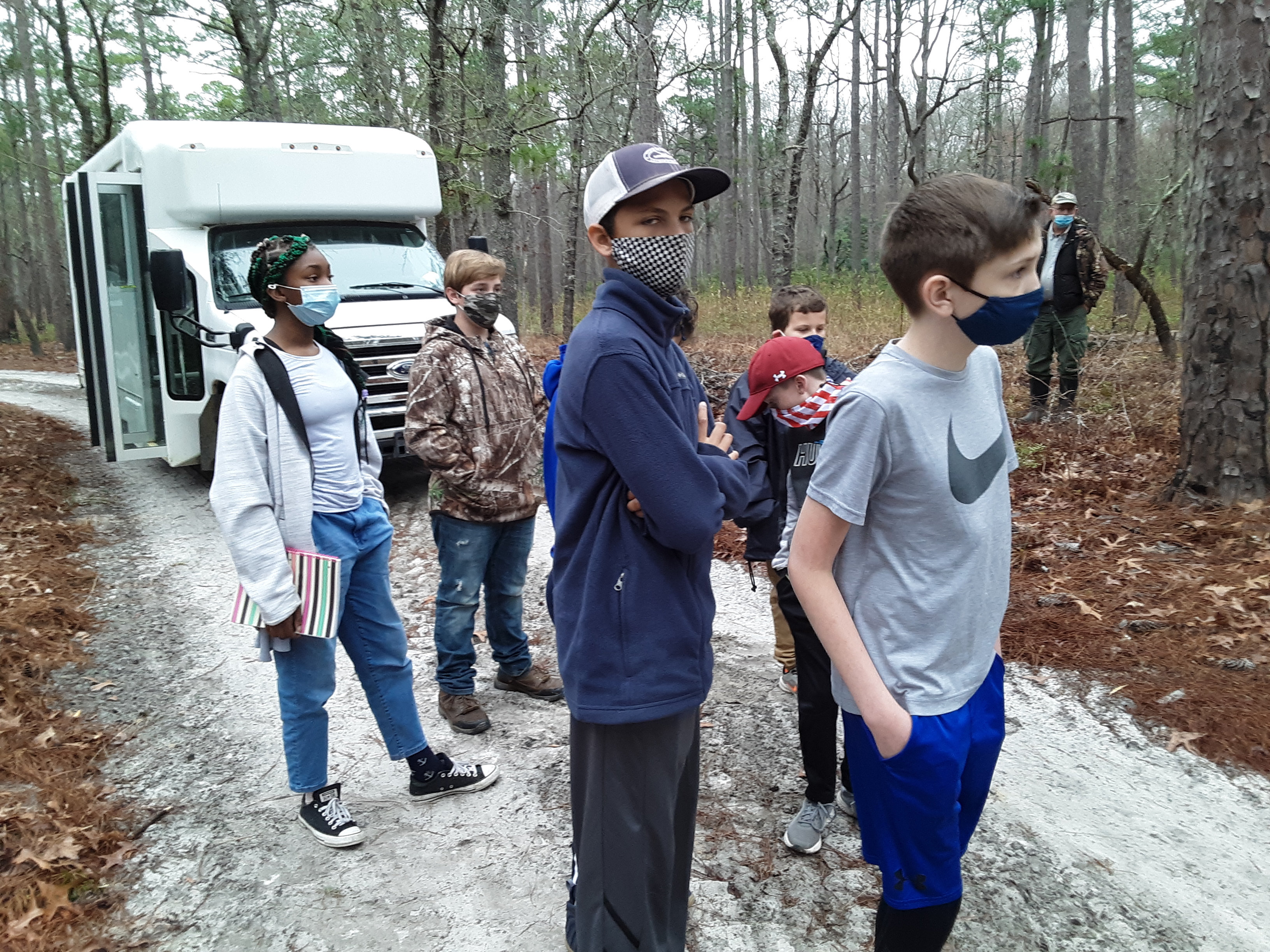
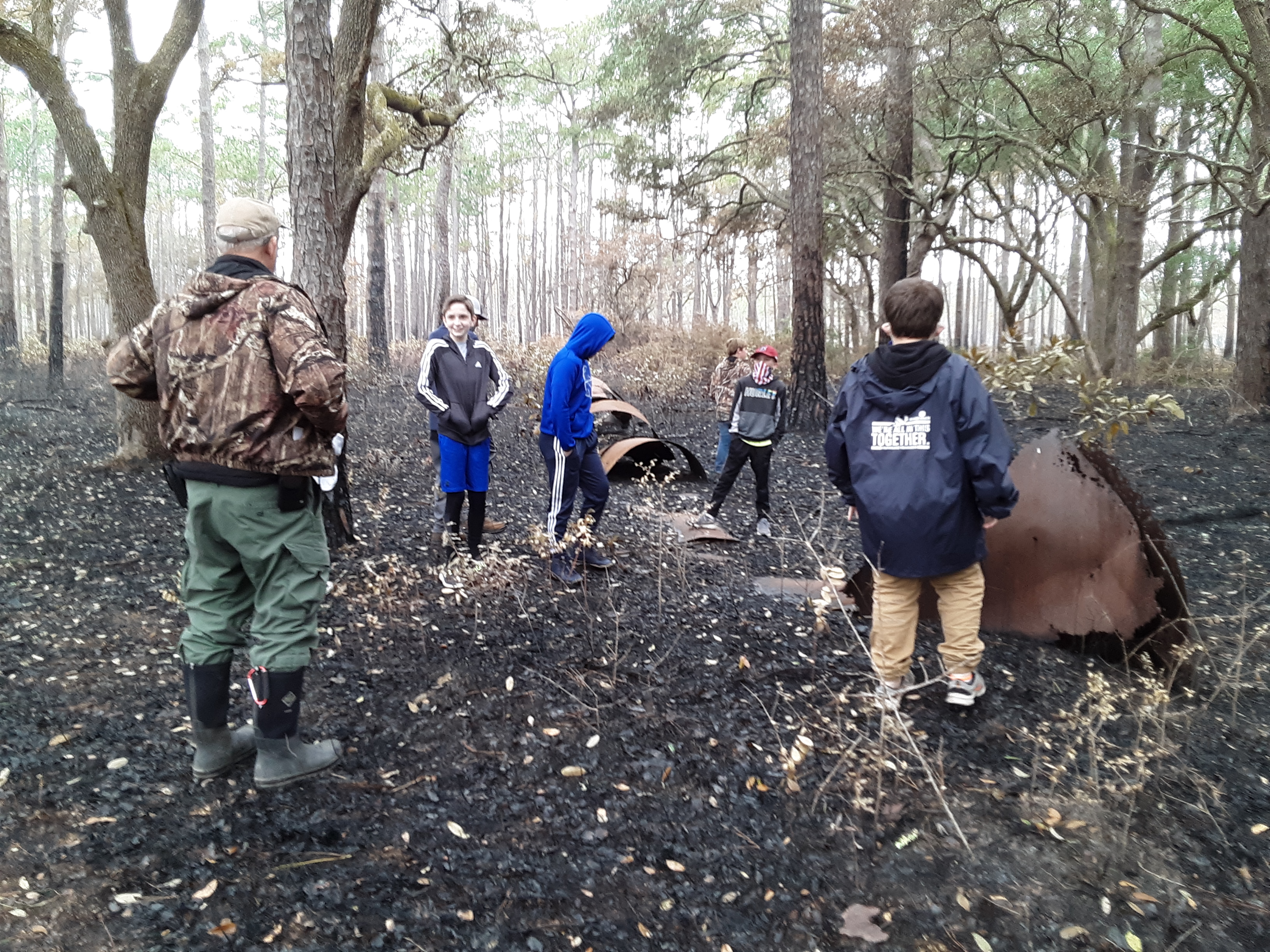
Our first stop was a recently burned section of pine forest, where Mr. Jamie Dozier of DNR taught us how to recognize loblolly, long-leaf, and pond pines. We had the first of many conversations about forest fires, which play a vital role in the life cycle of the long-leaf pine and that of many other species.
The land that is today the Yawkey Wildlife Preserve looks pretty wild and untouched at first glance. However, several industries have thrived here over the years, leaving behind evidence of human activity. Mr. Jamie showed us a “cat tree”—a pine tree which used to be regularly exploited for its sap (resin). He also explained that a lumber business in the 1920s cut down almost every tree on the acreage. We saw a fallen metal chimney and a small water cistern that were used in the steam engines of its lumber milling and planing equipment. We also saw traces of the railroad tracks that hauled the boards to waiting barges on the Santee Delta.
Mr. Jim then drove us to see a forest of mostly long-leaf pines, where three colonies of red-cockaded woodpeckers make their home. These members of the Picidae family are endangered because they only nest in long-leaf pines. The long-leaf pines (oddly enough) have been dying out over many decades because there were not enough forest fires. We saw mature long-leaf pines with white bands painted around their trunks; these are where the wood-peckers nest. Sadly, we did not see any of these fascinating birds but Mr. Jim assured us that if we can come back during their nesting season in May, they would be all over.
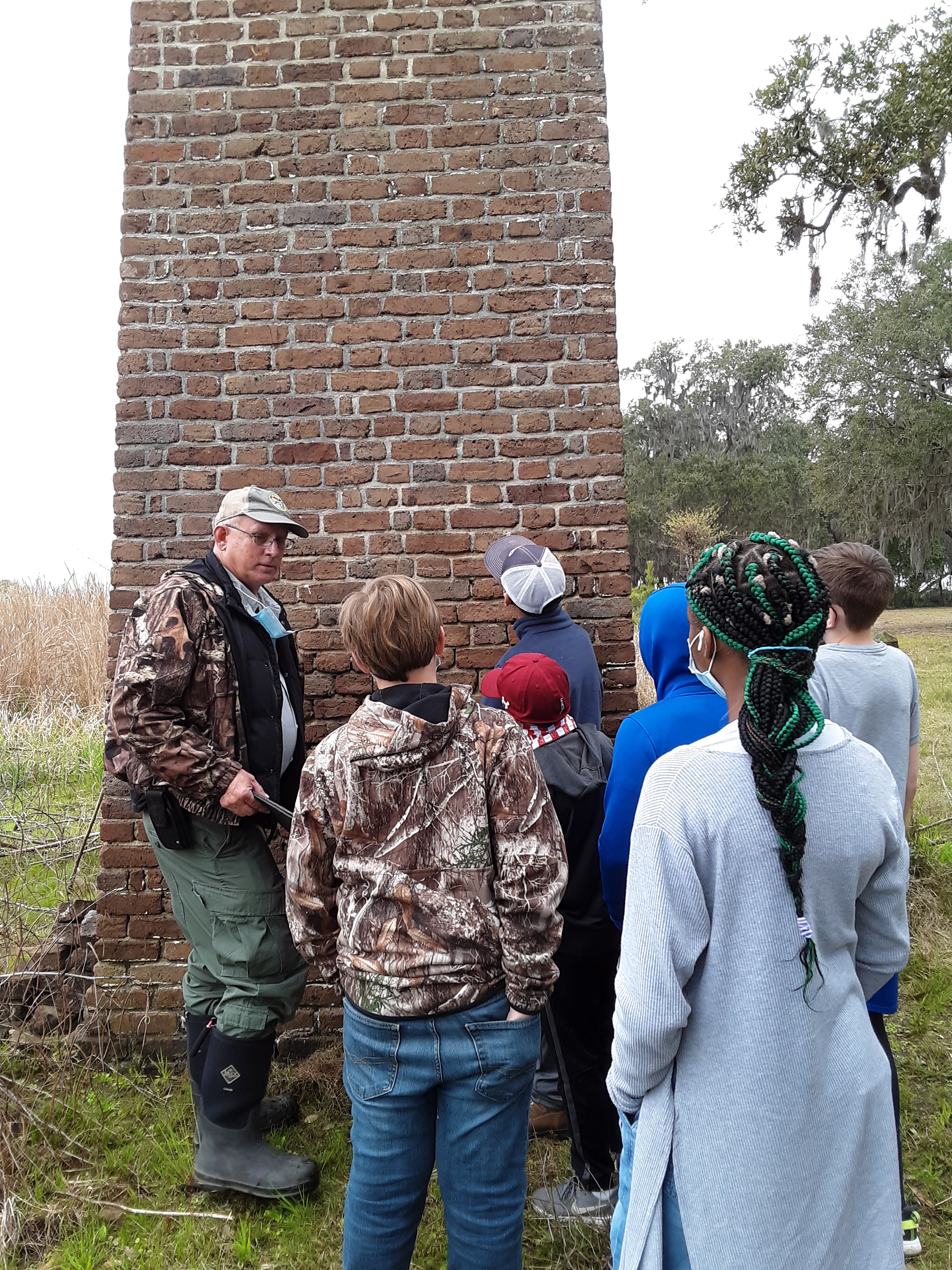
More evidence of human activity appeared as we drove long to another area of the property. Mr. Jim brought us to a beautiful 40-foot chimney fashioned from handmade bricks which used to serve the rice mill. The rice mill burned down completely but the tall chimney remains intact. We saw the handprints of the workers who made the bricks in the clay.
Finally, Mr. Jim talked to us about the small industry of tar and pitch production. Workers (known as “tar-heels”) would build a mound of heart-of-pine scraps, cover it completely with dirt with a small air hole, then set a smoldering, underground fire. The fire released heavy resin from the wood in the form of tar and pitch. These products were stored in barrels and sold to shipbuilders in the U.S. and Europe. Producing tar and pitch was an extremely hardscrabble way to make a living for these forest folk.
Seeing the forest soaring above its fire-blackened bed was really magical. “Can we just stay here a little longer?” asked Nathan. Mr. Jim thought it was a great idea. Off the kids went, running through the trees, hollering and exploring. When it was time to board the bus again, everyone had filthy shoes and soot-blackened pants, source of much amusement.
Our final lesson with Mr. Jim was about the sense of well-being which spending time in the forest confers. “Your blood pressure drops and your cognitive function goes up,” he told us. “It’s especially important for young people.” Lucky for us, we are invited to come back anytime. Kingfishers had experienced first-hand the joy and fun of being outside in such a beautiful, protected place.
Thank you to Mr. Jim Lee and Mr. Jamie Dozier of DNR for being our tour guides. Thank you, Dr. Neubauer, for setting up this wonderful field trip and thanks to Mrs. Crosby and Mme Gates for chaperoning. “This was the coolest field trip ever,” said Quinn.
What would happen if a Harpy Eagle fought a Kangaroo? Or an Ifrit sparred with a Brussels Griffon? That’s what Kingfishers found out when March Mammal Madness began.
Back in 2016, Dr. Katie Hinde of Arizona State and some colleagues decided to play with the idea of NCAA March Madness. They staged online contests between different, wonderful animals, creating an alternate sports universe, with brackets to fill out and regular eliminations until the championship. Learning about mammals turned into a game.
“It seemed like the school could use some fun,” Dr. Neubauer said. “And it seemed like it could be kind of entertaining and you could also learn something.” To participate in March Mammal Madness, students filled out a bracket with the animal they thought would come out on top if two animals were placed in the same environment.
Every Tuesday and Thursday in March, battles were held online and new rankings would be posted in the hallway. Students would gather around and see if their predictions for the most recent match were correct. If they were, the students would earn more points and possibly go up in the leaderboard.
Some students were constantly moving up while others stayed in the same position. “I feel like it was fun even though I’m in last,” Baryck says. He had the honor of holding the last place position for the whole competition. Mme Gates also found herself near the bottom. “I was really counting on that Civet to do better,” she says.
The Kangaroo became the 2021 Champion Mammal by outlasting the Harpy Eagle. Luke picked the most correct champions, and he became our local winner. “I’m honestly surprised,” he says. “I’m the only fifth grader who did it.” March Mammal Madness gave students the opportunity to learn more about mammal and their habits. Thanks, Dr. Neubauer!
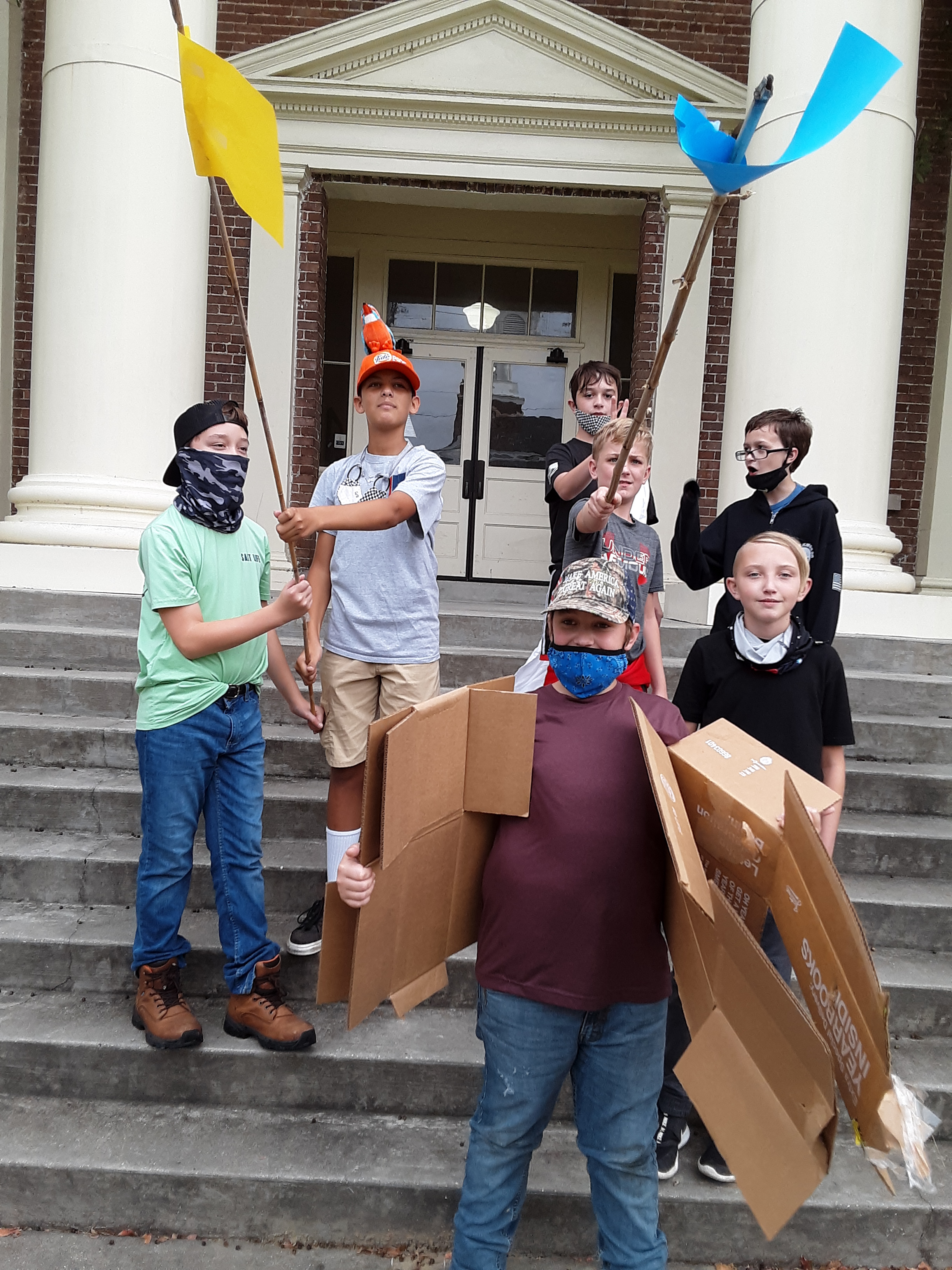
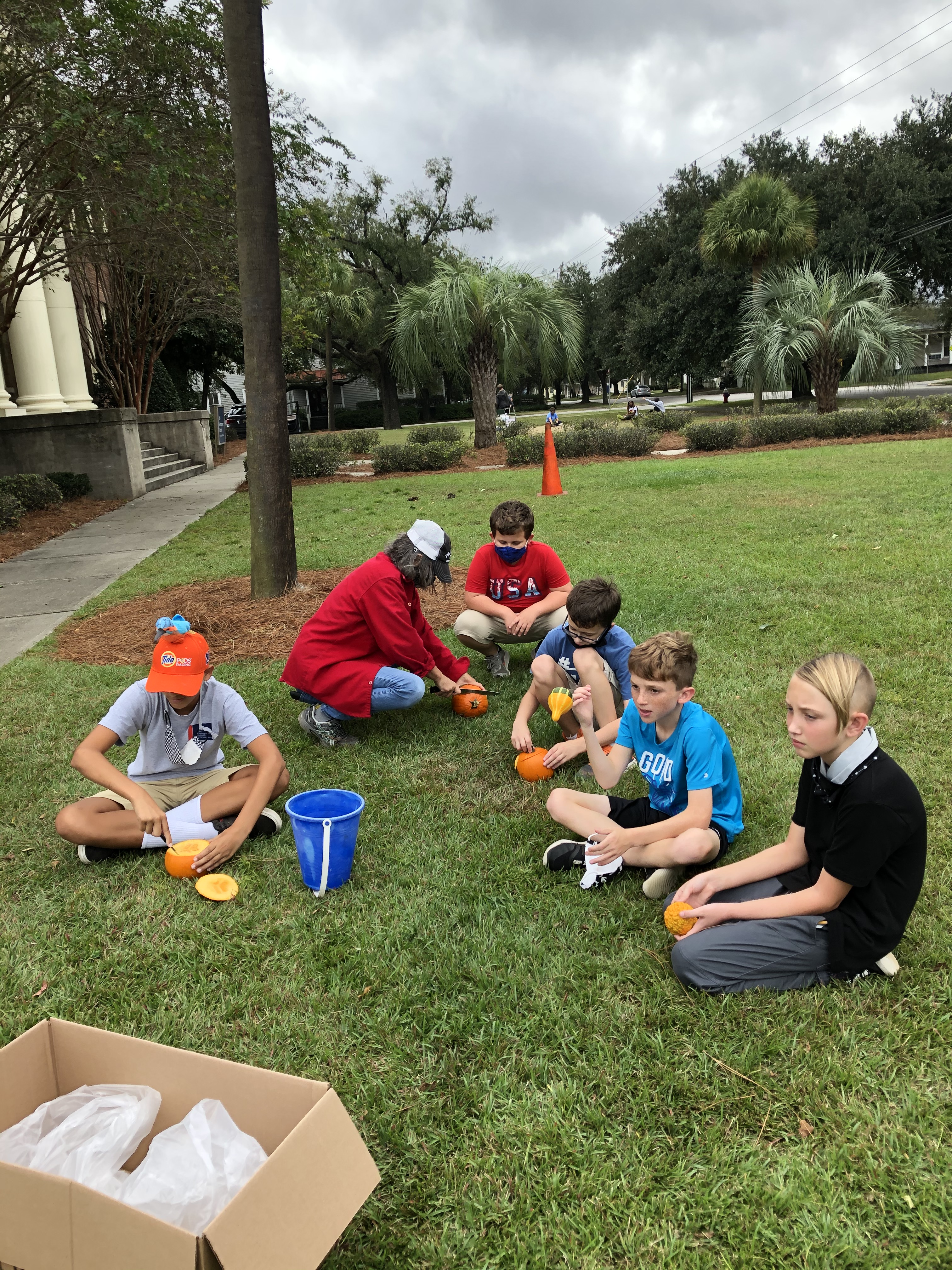
Middle schoolers attended the first-ever Kamp Kingfisher on Thursday, October 29. At Kamp Kingfisher, class takes place outside! Mrs. Crosby, dressed in hiking boots and cargo shorts, taught math on the sidewalk to students who worked their problems on their individual whiteboards. Ms. Grippo’s fifth-graders also did math and Language Arts out under a convenient oak. Dr. Neubauer’s Life Science class occupied the front lawn to carve pumpkins and decorate the portico for Halloween.
Mme Gates’ Latin II students re-enacted a naval race from one of their stories using carboard boats with bamboo masts. Physical Science left their circuit work to go on a Halloween walk with Mr. Patrick. Everyone had a grand time.
A sudden rain shower at lunch forced the postponement of a giant game of Sharks and Minnows involving tiny water squirters. But the fun didn’t stop. Mrs. Crosby’s Language Arts class made a “campfire” outside and read their spooky tales out loud to each other. Then they got to eat individually wrapped s’mores. Everyone was worn out by the end of the day.
Thank you, Mrs. Crosby, for organizing such a fun day for Middle School!











 The Georgetown School
You must be logged in to post a comment.